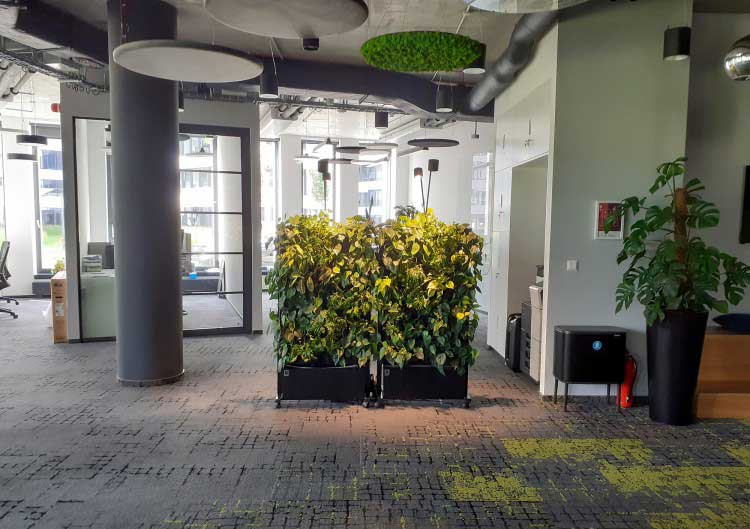

Plants that humidify the air – which species are suitable for an office with dry air?

Dry air in the office is a common problem. It occurs especially during the heating season, but also in other months of the year in air-conditioned rooms. Low humidity significantly affects the comfort and health of the users of the space. Which plants effectively and naturally humidify the air to solve this problem?
Why are air-humidifying plants important in the office?
Plants that humidify the air optimise the microclimate in the office and improve the well-being of employees. Modern office spaces – air-conditioned and heavily heated – struggle with the problem of dry air. This phenomenon is much more common in commercial spaces than in private homes. The reason for this is air conditioning and heating in winter. Combined with the insulation used in buildings, these factors cause the relative humidity to fall significantly below a comfortable level (usually below 30%).
In such conditions, users of the space begin to feel discomfort: dry eyes, throat and skin irritation. Sometimes allergic reactions and a tendency to inflammation occur. As a result, employees experience a decrease in concentration and fatigue, which translates into a worse mood and reduced efficiency. As can be seen, there is a strong need to effectively improve air humidity while optimising operating costs.
Research confirms that plants in offices improve humidity, well-being and work efficiency!
Research on humidity in office spaces commissioned by 4Nature System revealed an interesting correlation. In offices where vertical gardens were installed – structures with live plants that humidify the air – employees reported feeling better and being more productive. When plants appeared in the rooms, not only did the microclimate change, but so did the perception of the interior. The arrangement gained a great look, and the workplace became better perceived.
Research on how green walls affect air humidity confirms that flowers that humidify the air are a natural, aesthetic and relatively simple solution to the problem of dry air. Through physiological processes, greenery provides moisture to the environment, supporting the well-being and health of employees. Why are natural solutions more effective than traditional air humidifiers? Because they cover many more areas! Properly selected and arranged plants not only change the humidity in the office, but also optimise acoustics and tone the emotions of the space’s users.
How do plants humidify the air? Natural mechanisms of action
To understand why plants that humidify the air are so effective, it is worth learning about the key processes that make this possible: transpiration and evaporation of water through the leaves.
Transpiration is a process in which a plant takes water from the soil, transports it through the stems to the leaves, and then releases some of this water in the form of water vapour through the stomata (microscopic openings on the underside of the leaf), the cuticle (covering the skin) or through the stem.
Evaporation through the leaf surface contributes to moisture loss, especially in conditions of high leaf tissue moisture content
As a result of these processes, the plant acts as a natural “humidifier” – it converts water absorbed from the substrate into water vapour, which is distributed into the environment. As the air becomes more humid, transpiration slows down until it reaches equilibrium with the environmental conditions.
Plants vs. traditional humidifiers – comparing the advantages and limitations
| Feature | Plants that humidify the air (vertical gardens) | Traditional air humidifiers |
| Energy/power supply | electricity (automated irrigation and lighting system) | electricity |
| Aesthetics and decorative value | high aesthetics combined with a natural improvement in the microclimate | purely functional |
| Area of operation | They optimise air quality, microclimate and acoustics, reduce stress levels, influence emotions and creativity, improve design and perception of space, and can be used to divide space (partition walls). | humidify the air, improve the microclimate |
| Integration with interior design | They become an integral part of the interior design and can be incorporated into furniture, mobile green walls and partition panels. | limitation in integration with office design |
Plants vs. classic humidifiers – comparing the advantages and limitations Well-chosen and well-placed air-humidifying plants can significantly increase the humidity in a room. To achieve this effect, offices often use plant walls near workstations, in corridors or in relaxation areas. The location of the structure is of great importance, as is the choice of specific plant species, but above all, the key factor is their quantity, which should be adjusted to the size of the office. A few pots of flowers are not enough to effectively improve humidity in the office. Plants vs. classic air humidifiers – a comparison of advantages and limitations
The best plants for humidifying office air – proven species Plants vs. classic humidifiers – a comparison of advantages and limitations
Below, we have selected several popular species that are ideal for humidifying the air in office environments. We use some of them in our vertical gardens. Plants vs. classic air humidifiers – a comparison of advantages and limitations
Fern (Nephrolepis)
- Appearance: light green, kidney-shaped leaves, arranged in plumes on stems, dense and branched
- Requirements: partial shade or diffused light, constant soil moisture, moderate fertilisation
- Where in the office: by desks, in passageways, on structures between zones
Areca palm (Dypsis lutescens)
- Appearance: slender, dark green leaves – arched
- Requirements: diffused light, moderately moist soil, warm location
- Where in the office: in the corners of open spaces, near relaxation areas
Spathiphyllum
- Appearance: compact, upright habit, leathery and glossy leaves, distinctive white inflorescences
- Requirements: partial shade, shade, stable temperature, moderately moist soil
- Where in the office: furniture with built-in greenery and green walls in conference rooms, reception areas and relaxation areas
Ivy (Hedera helix)
- Appearance: a climbing plant with delicate, dark green, leathery leaves
- Requirements: shade, partial shade, moderately moist soil
- Where in the office: vertical installations, open kitchens and dining areas in the office, corridors, passageways
Ficus (Ficus elastica)
- Appearance: large, elliptical, glossy leaves, depending on the variety – may be two-coloured
- Requirements: bright or semi-shaded location, moderate moisture
- Where in the office: near walls, in corners, in places where a tall accent looks good
Each of these species has the potential to act as a plant that humidifies the air and improves its quality in the office. It is worth combining them in compositions to achieve the best effect, placing plants at different heights, using a specific density and type of leaves. This is exactly what we do at 4Nature System, composing our green walls and arranging plants vertically.
Flowers that humidify the air in the office – how to choose species suited to working conditions?
Choosing the right species is only half the battle. It is equally important to arrange and care for them properly so that the flowers that humidify the air are healthy and fulfil their function continuously throughout the year. How to arrange plants in the office?
Open space and workstations
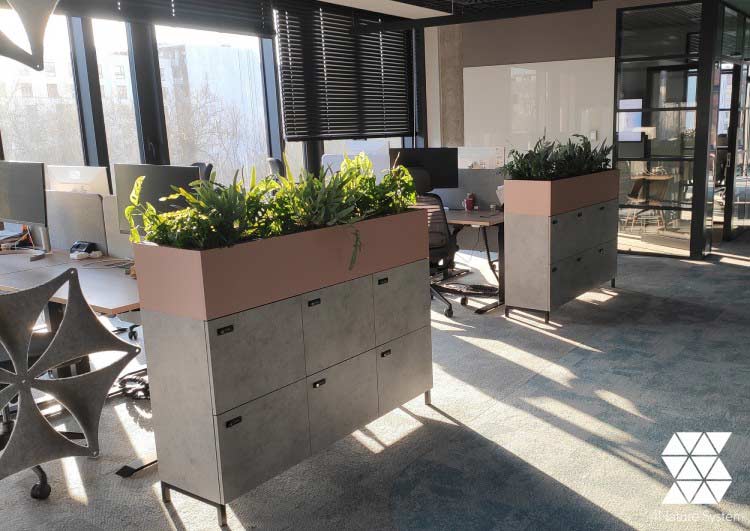
- Place plants near rows of desks (low green walls, mobile vertical gardens, shelves with plants or on green partition walls).
- Use 4Nature Wall wall-mounted structures just above workstations located along the wall.
Conference rooms, offices, kitchens, dining rooms
- Place plants in the corners of rooms, against walls or on walls in the form of vertical gardens so that they do not take up space in the middle of the room or office.
- Choose species that like shade or partial shade, but make sure that the plants have at least minimal access to light. You can also support the greenery with dedicated artificial lighting (this is what we do with our plant systems, using special LED lamps).
Recreation areas, corridors, loggias and reception areas
- Areca palms, dracaenas or larger specimens are ideal for places where decorative value is important and there is more empty space – loggias, reception areas
- When arranging regeneration zones where employees can relax in contact with greenery, make sure to include plants that humidify the air over large areas: green walls or mobile vertical gardens. Create a green oasis in your office with a unique microclimate.
- Vertical compositions of shade-loving plants will also work well in corridors, where walls usually remain undeveloped.
Combine plants for better humidity in the office
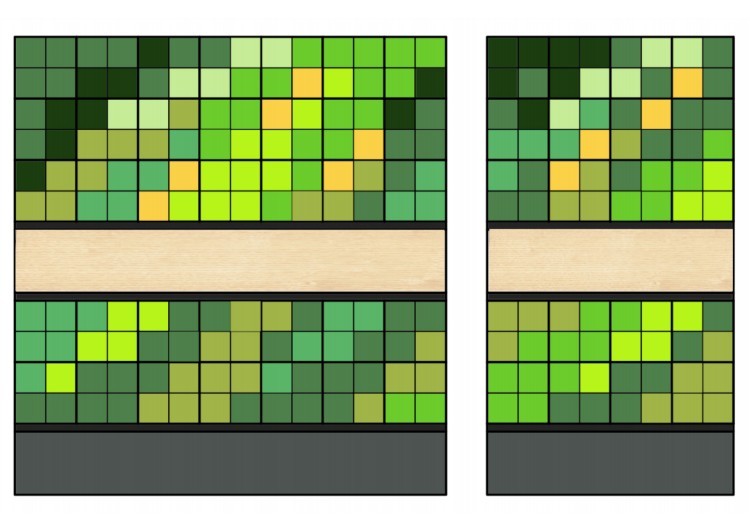
Similar to natural “systems” found in nature, diversity works best. Combining different plant species in one area allows for optimal evaporation and air humidification. This is how modules combined in vertical gardens work – appropriately composed plants placed in containers at different heights more effectively improve humidity in the office.
What should you do to ensure that plants that humidify the air retain their properties?
- Water the plants regularly, but avoid overwatering.
- Ensure moderate fertilisation.
- Clean the leaves of dust.
Remember: a healthy plant means greater transpiration activity. If you ensure the right conditions (light, humidity, care) for your plants, the flowers that humidify the air will “take care” of the microclimate in the office and the comfort of its users.
How to incorporate air-purifying plants into your office design?
Plants that humidify the air are one of the best elements of office design: they improve both the design and the microclimate. How to introduce greenery into your interior?
Individual planters or green walls?
Free-standing planters are a good solution for smaller spaces or as a decorative addition. They work well in corners of rooms, between workstations, against walls, on tables or window sills. However, their effectiveness in humidifying the air is limited. Achieving a noticeable improvement in humidity would require placing many planters.
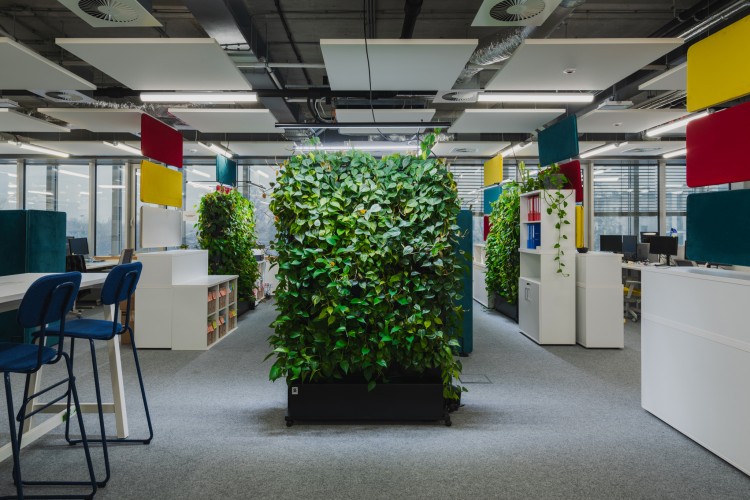
Vertical gardens and mobile green walls allow for the effective placement of dozens of plants without taking up floor space. Vertical structures are not only a great biophilic design, but also a tool for optimising air quality in the office.
A naturally better office – vertical gardens for your team from 4Nature System!
Integrating nature into the user’s space promotes concentration, reduces stress and increases creativity. At 4Nature System, we offer plant systems equipped with automatic irrigation and lighting. Monitoring and control of conditions (IoT) make it easy to keep plants in excellent condition. Such intelligent care relieves office users and allows them to focus on the benefits: working in a place with exceptional aesthetics and a healthy microclimate.
Do you want your team to work in a healthier, more comfortable environment? Introduce a solution to your office that will significantly improve air humidity and change the perception of the interior. A vertical garden or mobile vertical garden fits perfectly into the office space, harmoniously complementing the interior design and creating a coherent, functional working environment.
4Nature System vertical gardens – 4Nature Wall, 4Nature Vitis, 4Nature Smart Green – have been developed with offices in mind. They combine design, technology, automation and real benefits for the working environment.
Contact us – together we will design a solution with air-humidifying plants tailored to your company’s needs.