
Peperomia Caperata – compact greenery with distinctive leaf structure
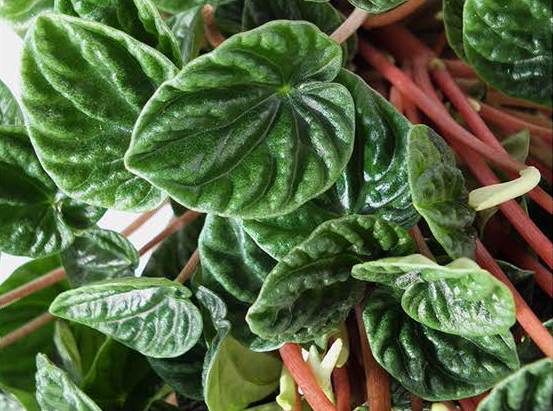
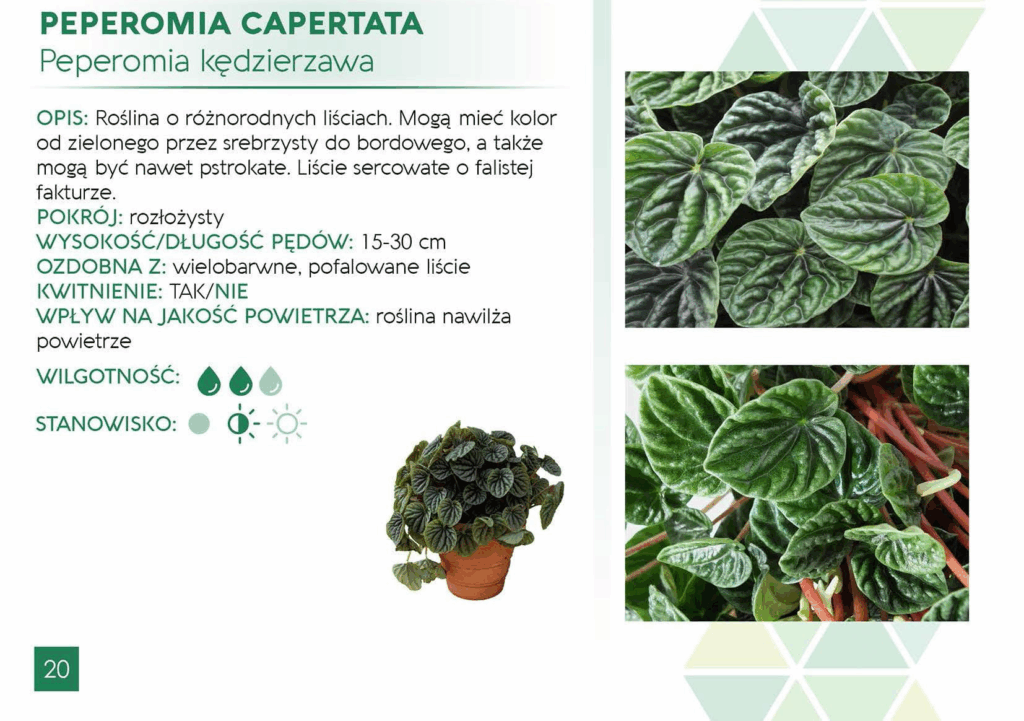
Peperomia Caperata, also known as ripple peperomia, is a plant that perfectly fits into modern office and commercial interiors. Its greatest asset is its heart-shaped, heavily rippled leaves that create a sculptural, almost architectural structure. The leaf coloration can vary depending on the variety – from deep green, through silvery reflections, to burgundy shades and delicate discolorations. Thanks to this, Peperomia Caperata acts as a natural decorative accent that organizes space and gives it a modern character.
Its spreading yet compact habit and small height (approximately 15–30 cm) make the plant work well both as an element of compositions in pots and in more advanced installations.
Peperomia Caperata – Location and Light in Offices and Commercial Spaces
Peperomia Caperata develops best in locations with diffused, indirect light, which is why it works well in offices, hotel lobbies, and common areas where daylight is limited or supplemented by artificial lighting. The lack of need for direct sun exposure allows the leaves to remain in good condition and maintain the plant’s aesthetic appearance throughout the year.
Key features important in commercial arrangements:
- good tolerance of shade and diffused light,
- stable growth without risk of leaf damage,
- predictable form throughout the season.
In system installations, such as furniture with built-in vertical gardens, peperomia maintains a compact structure and does not require intensive care, making it a practical choice for projects focused on durability and visual coherence.
Peperomia Caperata and Indoor Microclimate – Humidity and User Comfort
One of the important features of Peperomia Caperata is its positive impact on indoor microclimate. The plant naturally supports air humidification, which is particularly important in offices and commercial spaces with air conditioning. Such properties align with the modern approach to interior design, where user comfort and well-being play an increasingly important role.
Key benefits of Peperomia Caperata in the context of microclimate:
- support for natural air humidification,
- improvement of comfort in enclosed spaces,
- compatibility with biophilic design and well-being principles.
If you want to better understand how vegetation affects the work environment and the daily comfort and concentration of employees, check out our article dedicated to well-being in offices.
How to Water Peperomia Caperata? Substrate and Care
Peperomia Caperata does not require intensive watering. The principle of moderate moisture works best – watering only when the top layer of substrate dries out. Of key importance is a light, permeable soil mix and effective drainage that prevents water stagnation and problems with the root system.
Thanks to its low maintenance requirements, the plant is excellent for use in system greenery, where reliability and aesthetics maintained over a long period are crucial.
Peperomia Caperata in System Greenery and Furniture with Living Plants
Peperomia Caperata fits perfectly into modern solutions. It can be used both in vertical gardens and in mobile living walls, such as:
- 4Nature Basic – ideal for work zones and reception areas,
- 4Nature N’joy – supporting space division and acoustics,
- 4Nature Amstel – modular solutions for flexible office arrangements.
In such installations, peperomia serves as an aesthetic filler that strengthens the perception of the entire composition without visually dominating it.
Peperomia Caperata in Modern Interior Arrangements
Thanks to its decorative leaves and compact form, Peperomia Caperata perfectly fits into concepts of green relaxation zones, reception areas, and common spaces. It is readily used in projects based on biophilia and sustainable design, where plants serve not only an aesthetic function but also support user comfort.
Key advantages of Peperomia caperata in interior arrangements:
- distinctive, rippled leaf structure,
- compact size facilitating composition,
- coherence with modern and ecological design.
This is a plant that combines design, functionality, and ecology, strengthening the modern company image and the quality of usable space.
Frequently Asked Questions about Peperomia Caperata
What location is best for Peperomia caperata?
It grows best in a bright location with diffused light or in shade, without direct sun.
How often should I water Peperomia caperata?
Watering should be done only after the top layer of substrate has dried out.
Is Peperomia caperata suitable for offices and commercial spaces?
Yes, it does well in offices and interiors with air conditioning and limited daylight.
Does Peperomia caperata affect the indoor microclimate?
The plant supports natural air humidification and improves comfort in rooms.
Is Peperomia caperata difficult to care for?
No, it is a plant with low maintenance requirements and stable growth.
Sources:
https://en.wikipedia.org/wiki/Peperomia_caperata
https://plants.ces.ncsu.edu/plants/peperomia-caperata