Dieffenbachia in vertical gardens – a tropical plant that calms the space
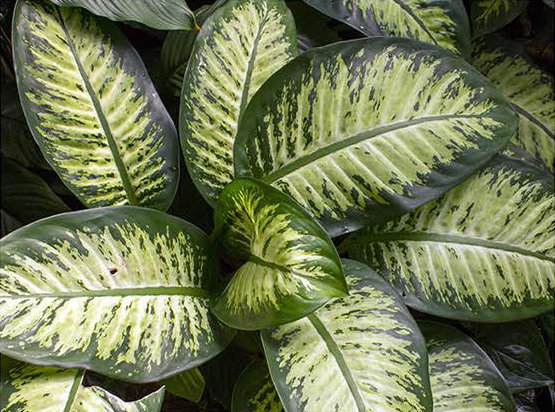
Dieffenbachia is a plant that doesn’t shout with its form but does exactly what’s expected of greenery in modern interiors. It builds a calm background, organizes the composition of a green wall, and fits well into vertical systems. In 4Nature System, we use it where stability, predictability, and the real impact of greenery on people’s comfort matter, not just a one-time visual effect.
Where does Dieffenbachia come from?
Dieffenbachia comes from humid regions of Central and South America. In nature, it grows in partial shade, under the cover of larger plants, in an environment with stable humidity and without sudden changes in conditions. This is important information because we try to recreate exactly this environment in modern office interiors.
Its natural origin means that:
- it tolerates diffused light well,
- it doesn’t need full sun,
- it likes uniform watering and a stable microclimate.
Thanks to this, dieffenbachia fits perfectly in solutions such as custom living walls and vertical gardens designed for office interiors, hotels, or common spaces. It’s a plant that doesn’t fight with the space, it simply adapts to it. It tolerates conditions typical of modern buildings well and “holds its form” where greenery is meant to work calmly and long-term, not just make a first impression.
Light, humidity, and calm – conditions in which Dieffenbachia works best
A green wall in office space is an environment where dieffenbachia feels exceptionally well. It’s one of those plants that “don’t have excessive expectations” – bright but diffused light and stable conditions are enough for it to maintain good form for a long time.
In practice, this means that:
- it grows best in partial shade or bright interiors without direct sunlight,
- it responds well to automatic watering systems,
- it doesn’t like drought or sudden changes in humidity.
That’s exactly why it often appears in our furniture with built-in vertical gardens, such as 4Nature Basic, 4Nature N’joy, or 4Nature Amstel. In such systems, the plant has exactly what it needs – and simply “does its job.”
Dieffenbachia and air quality and employee wellbeing – greenery that really supports people
Dieffenbachia is not just decoration. Its presence really affects the interior microclimate. The plant helps reduce volatile organic compounds such as formaldehyde or benzene, while improving air humidity. It’s dieffenbachia that shows how plants help create offices that attract people, not just look good in visualizations.
In office spaces, this translates to:
- greater work comfort,
- less eye fatigue,
- better employee well-being.
Greenery based on well-thought-out species works calmly but consistently – day after day. This is exactly the impact of vegetation on office workers’ well-being that makes a space stop being just a workplace and start really supporting people. Such greenery doesn’t distract, it organizes the interior and supports the natural rhythm of work, improving the quality of daily functioning in the office.
Care of Dieffenbachia in green walls
One of dieffenbachia’s greatest assets is its predictability in maintenance. In vertical gardens, it doesn’t cause problems, as long as basic conditions are provided.
The most important care principles:
- moderate, regular watering,
- permeable substrate,
- stable temperature and no drafts,
- periodic fertilization during the growth season.
In our 4Nature System projects, the plant is covered by professional service, which additionally eliminates the risk of errors and ensures that the green wall maintains its aesthetics for years.
Where does dieffenbachia work best in 4Nature System projects?
In designing greenery for interiors, what’s crucial is not only how a plant looks, but above all how it behaves over time. Predictability, resilience, and whether the greenery really supports the space rather than generating problems in daily use matter. Dieffenbachia “works” best where greenery is meant to be functional and long-term.
It works best in:
- receptions and lobbies,
- open spaces,
- relaxation zones,
- furniture with built-in greenery.
In 4Nature System, we treat it as a plant that stabilizes the composition, calms the space, and naturally supports people using the interior daily. Without unnecessary “wow” effect, but with real value.
Most frequently asked questions about Dieffenbachia
Is dieffenbachia suitable for vertical gardens in offices?
Yes, dieffenbachia fits well in vertical gardens because it likes stable conditions, diffused light, and uniform watering. It’s a predictable plant that works well in long-term systems.
What light is best for dieffenbachia on a green wall?
Bright, diffused light or partial shade works best. Direct sunlight can cause leaf damage, so it’s not recommended in office spaces with strong sun exposure.
Does dieffenbachia improve air quality in the office?
Yes, the plant supports the reduction of volatile organic compounds and helps maintain a favorable microclimate. Its presence positively affects employee comfort and well-being.
Is dieffenbachia difficult to care for?
No, when basic conditions are provided, it’s an easy and predictable plant to maintain. In vertical systems with automatic watering, it practically causes no problems.
Where is it best to use dieffenbachia in 4Nature System projects?
It works best in receptions, open spaces, relaxation zones, and in furniture with built-in greenery. It’s a plant that stabilizes the composition and supports the daily functioning of the space.
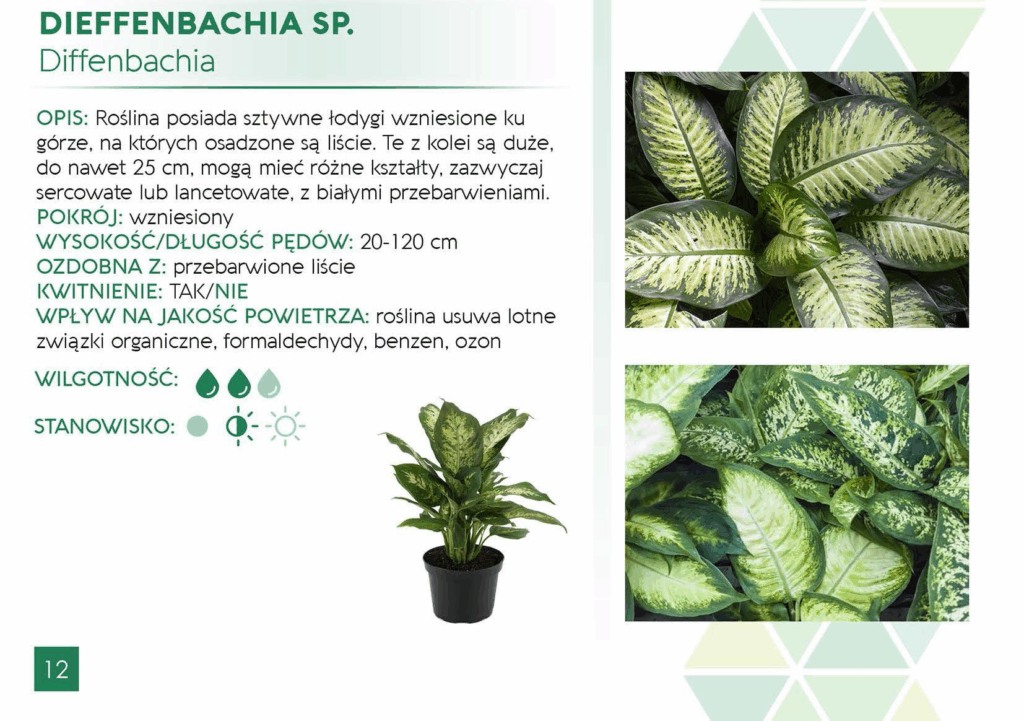
Sources:
https://en.wikipedia.org/wiki/Dieffenbachia
https://www.wisdomlib.org/science/journal/world-journal-of-pharmaceutical-research/d/doc1372470.html