
Air-purifying flowers in the office – which species should you choose if you want to improve the air quality at work?

Office air often only pretends to be fresh. Air conditioning, furniture, printers, carpets – all of this constantly releases compounds that cause headaches and break concentration. After a few hours of work, it’s very noticeable. Air-purifying plants in the office are not decoration “for the eye.” They work for real – they support health, improve well-being, and help teams work more calmly. Check which plants actually filter air, which species tolerate office conditions well, and how to introduce them into space so that the effect is noticeable. Not symbolic, but real.
Why are air-purifying plants the best investment in the office?
Air-purifying plants work like natural filters. They absorb toxins, improve humidity, and increase oxygen levels. This is not theory – NASA Clean Air Study research shows that selected species neutralize several types of pollutants simultaneously and really support concentration. And now the most important thing from the company’s point of view. This is not a “nice addition.”
Air-purifying plants in the office translate into concrete effects:
- better concentration and less fatigue during the day,
- reduction in sick leave,
- productivity increase of up to 15%,
- positive impact of plants on office workers’ wellbeing and work atmosphere,
- company image that actually implements ESG principles.
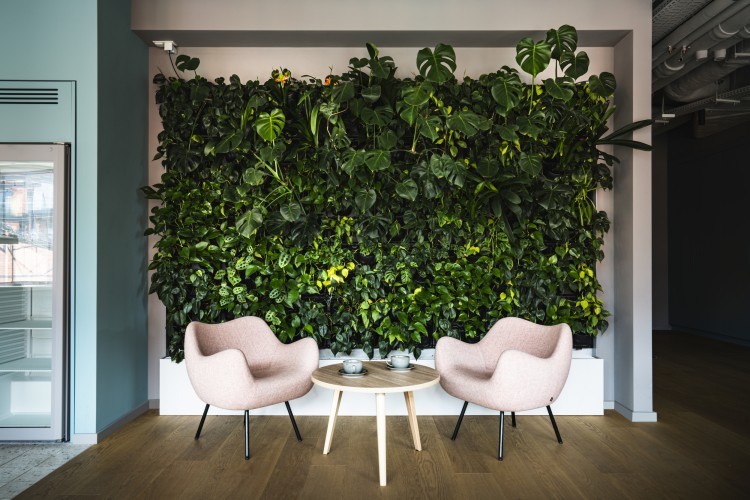
That’s why more and more organizations are abandoning random pots. Instead, they choose vertical gardens, living plant walls, and vertical gardens. They work on a large surface, are stable to maintain, and – what’s crucial – provide a measurable air purification effect, not just a visual accent.
10 air-purifying plants that will work in a modern office
If the question arises, which plants purify air most effectively, the answer is not a matter of chance. These species appear in office projects time and time again. Why? Because they work, are resistant, and don’t require daily care. The list is based on NASA research and the practice of office arrangement with plants. What matters here is not only air filtration, but also whether the plant will survive in real working conditions, not just in a catalog photo.
1. Peace Lily (Spathiphyllum)
Spathiphyllum is a plant with glossy, dark green leaves and light inflorescences. It does well in partial shade and doesn’t require intense light. It’s easy to care for and tolerates office conditions well. It neutralizes benzene, formaldehyde, and trichloroethylene.

2. Snake Plant (Sansevieria trifasciata)
Sansevieria has characteristic, stiff sword-shaped leaves. One of the most resistant office plants, it tolerates drought and air conditioning. Requires minimal care. Filters benzene, formaldehyde, and xylene.

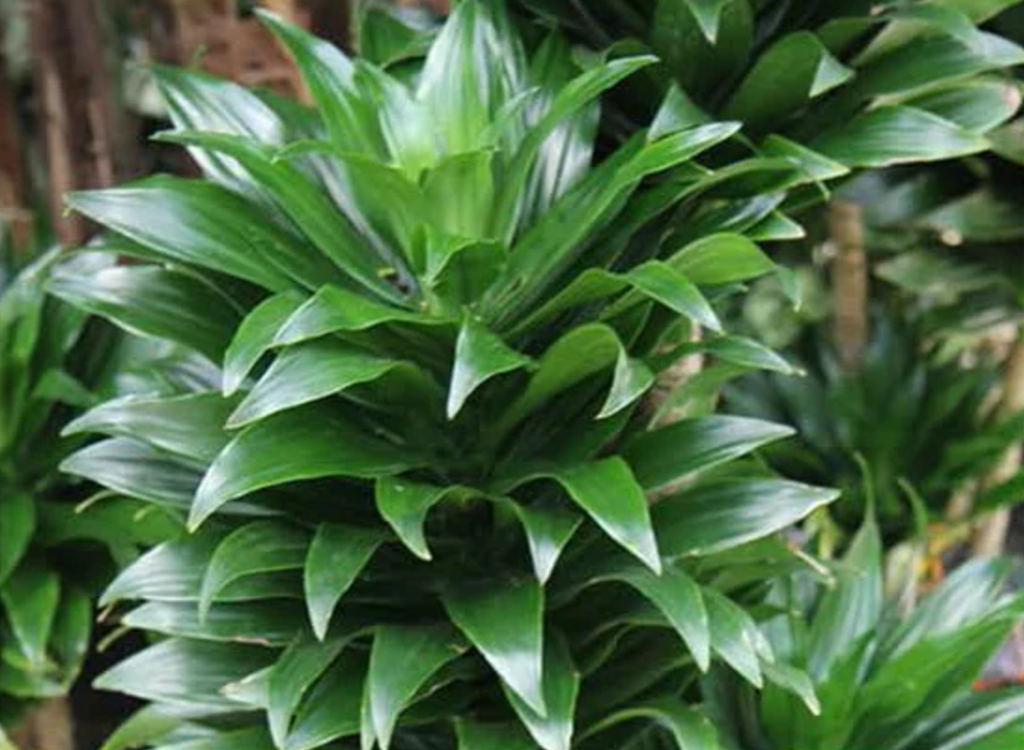
3. Dracaena (Dracaena marginata / Dracaena fragrans)
Dracaena is a slender plant with decorative leaves, often chosen for open spaces. It likes diffused light and moderate watering. It’s easy to maintain. Effectively reduces benzene, formaldehyde, and trichloroethylene.
4. Boston Fern (Nephrolepis exaltata)
Nephrolepis is a plant with delicate, feathery leaves that has a good effect on air humidity. Prefers shade and slightly higher humidity. Care is moderately easy. Neutralizes formaldehyde and xylene.

5. Creeping Fig (Ficus pumila)
Small-leaved ficus pumila with a climbing, dense habit, ideal for vertical arrangements and green walls. Tolerates shade and stable office conditions well, doesn’t require intense light. It’s easy to care for and quickly thickens. Helps reduce formaldehyde and benzene.

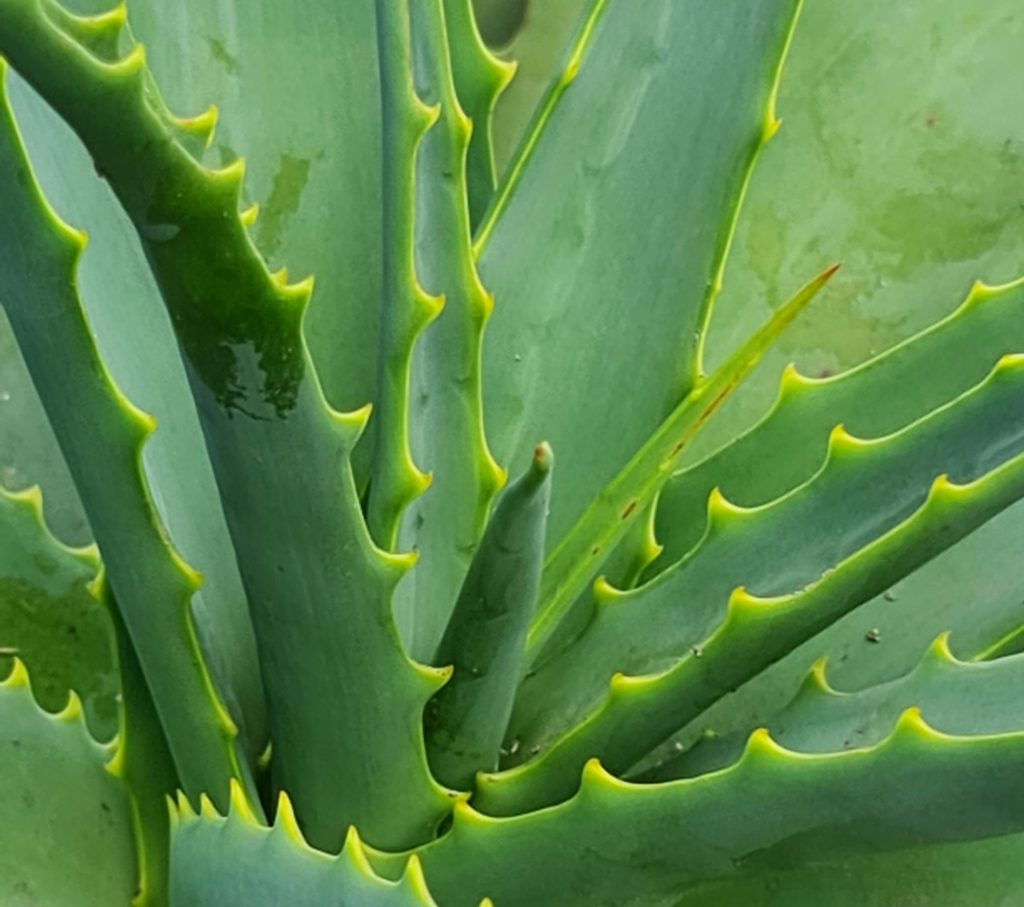
6. Aloe (Aloe vera)
A plant with fleshy leaves, very resistant and undemanding. Aloe likes bright locations and rare watering. It’s easy to maintain even without experience. Supports benzene reduction.
7. Areca Palm (Dypsis lutescens)
The palm has a light, feathery form that works well in representative spaces. Prefers bright places and moderate humidity. Helps neutralize formaldehyde and xylene and improves the microclimate.

8. Spider Plant (Chlorophytum)
Chlorophytum is a plant with a rosette habit, often also used in hanging versions. Very easy to care for and quick to adapt. Effectively absorbs formaldehyde and benzene.

9. English Ivy (Hedera helix)
A vine ideal for vertical arrangements and green walls. Ivy does well in partial shade and cooler rooms. Neutralizes benzene, formaldehyde, and trichloroethylene.

10. Golden Pothos (Epipremnum aureum)
Epipremnum aureum is one of the easiest office vines, with decorative, hanging shoots. Tolerates shade and irregular watering. Effectively reduces benzene and formaldehyde.

These species answer the question: which flowers purify air, because they work great in open space offices, corridors, and meeting rooms. In practice, each of them can serve as a potted air-purifying flower that really improves the work microclimate, not just “sits on the windowsill.” What’s important – these are exactly the ones that most often end up in vertical gardens and custom living plant walls, because they grow stably, tolerate variable conditions well and maintain their filtering properties for a long time.
Office air-purifying flowers – how to select species for working conditions?
The best air-filtering plant is one that will survive and work for years. That’s why the selection of species should always start with an analysis of conditions, not an inspiration catalog.
In offices with limited access to light, these work well:
- sansevieria,
- epipremnum,
- peace lily,
- ivy.
While in spaces with plenty of daylight, these do better:
- dracaena,
- areca palm,
- aloe.
Air humidity and air conditioning are another key factor. In dry open spaces, resistant species that don’t require daily care function best. These are exactly the ones most often integrated into mobile vertical gardens and furniture with built-in greenery, where the irrigation and plant selection system is optimized for office conditions. Well-designed greenery doesn’t burden the team with care duties, while simultaneously ensuring continuous air purification.
Toxin air-purifying plants – which species work most effectively?
A very specific set of pollutants circulates in offices. Most often these are formaldehyde from furniture and adhesives, benzene from printers and office equipment, and trichloroethylene present in paints and cleaning agents. These substances are invisible, but the body quickly feels them. Energy drops, it’s harder to focus, fatigue appears.
And here’s an important thing. Not every plant handles this equally well. Toxin air-purifying plants must have the real ability to absorb volatile compounds, not just “look good in a pot.” That’s exactly why the results of the NASA Clean Air Study are so often cited, which clearly show which species actually work.
If you look at specific examples, the best effects are given by:
- peace lily – one of the most versatile, it handles formaldehyde, benzene, and trichloroethylene simultaneously,
- dracaena – particularly effective with pollutants from office equipment and paints,
- potted chrysanthemum – rated very highly in NASA studies for reducing benzene and formaldehyde.
These are exactly the species that most often appear in lists of flowers that best purify air. They’re effective, but also tolerate real office conditions well. And that makes a difference. It’s also worth remembering that purification doesn’t happen only through leaves. The root system and microorganisms present in the substrate play a large role. They support the breakdown of toxins. That’s why one plant placed “somewhere near a desk” won’t change the air quality in the entire office.
Only larger compositions allow you to achieve an effect that you can really feel. Especially in large open space areas, where air circulates intensively throughout the day. Here toxin air-purifying plants show their full potential.
How to introduce air-purifying flowers to the office to really improve work comfort?
The most common mistake? Treating plants as a single decoration. One pot in the corner looks good, but doesn’t change air quality. If the goal is air-purifying flowers in the office, greenery must be planned consciously and placed where it actually “works.”
For starters, individual pots by desks or in communication corridors work well. Then it’s worth going a step further – plant sets in open spaces and plant islands that organize space, improve acoustics, and create natural work zones.
From our experience at 4Nature System, location makes the biggest difference. Plants placed work best:
- at reception – they filter air in the entrance zone and build first impressions,
- in open space – they support concentration throughout the day,
- in meeting rooms – they help reduce tension and fatigue,
- in relaxation zones – they promote regeneration and calming.
Where a larger-scale effect matters, vertical gardens or vertical gardens are increasingly chosen. They take up little space, work on a large biological surface, and – what’s crucial – don’t require employee involvement, because the irrigation system works automatically.
These are exactly the solutions we design at 4Nature System. We integrate air-purifying flowers with office architecture, creating mobile vertical gardens, green walls, and plant systems that really improve air quality and employee wellbeing. If greenery is to work, not just look good – it’s worth planning it thoughtfully from the start.
Most frequently asked questions about air-purifying flowers in the office
Do air-purifying flowers in the office really work?
Which flowers best purify air in office spaces?
Is one potted air-purifying flower enough to improve its quality?
Where is it best to place air-purifying flowers in the office?
Do vertical gardens really improve air quality?
Do plants in the office require a lot of maintenance involvement?
Source:
https://en.wikipedia.org/wiki/NASA_Clean_Air_Study