
Ficus elastica – rubber fig in green walls and modern offices

Ficus elastica, or rubber plant, is one of those plants that makes an impression at first sight, but gains even more when you get to know its practical capabilities. Large, glossy leaves, calm growth, and high tolerance for indoor conditions make this plant perfect for green walls, vertical gardens, and furniture with built-in greenery that we design at 4Nature System.
Ficus elastica – what is the natural occurrence and growth environment of this plant?
Ficus elastica comes from the humid tropical forests of Asia, where it grows in diffused light, sheltered by taller trees. In its natural environment, it doesn’t compete for full sun, but rather benefits from consistent conditions and stable microclimate. This is precisely why it works so well in office arrangements with plants, where it is not only aesthetic but also durable and functional. In office interiors, the rubber plant behaves calmly, doesn’t require constant adjustments, and adapts well to everyday conditions.
This is a plant that doesn’t like extremes. It prefers calm, predictability, and lack of sudden changes. These are exactly the conditions found in modern offices, hotels, or public spaces where we design custom living walls and vertical gardens.
Ficus elastica in vertical gardens – what kind of light does it need?
In vertical systems, Ficus elastica is valued for its flexibility and resilience. It grows best in bright, diffused light, but also copes well in partial shade. Direct sunlight is not necessary – and this is a significant advantage in green arrangements, where neurodesign in office spaces assumes creating an environment conducive to concentration, balance, and work comfort, not an excess of stimuli.
In practice, this means that:
- it tolerates supplementary artificial lighting well,
- grows stably in vertical compositions,
- doesn’t react nervously to minor changes in conditions.
That’s why the rubber plant often appears in our projects such as furniture with built-in vertical garden – both in the 4Nature Basic, 4Nature N’joy, and 4Nature Amstel versions.
Ficus elastica and air quality and employee wellbeing
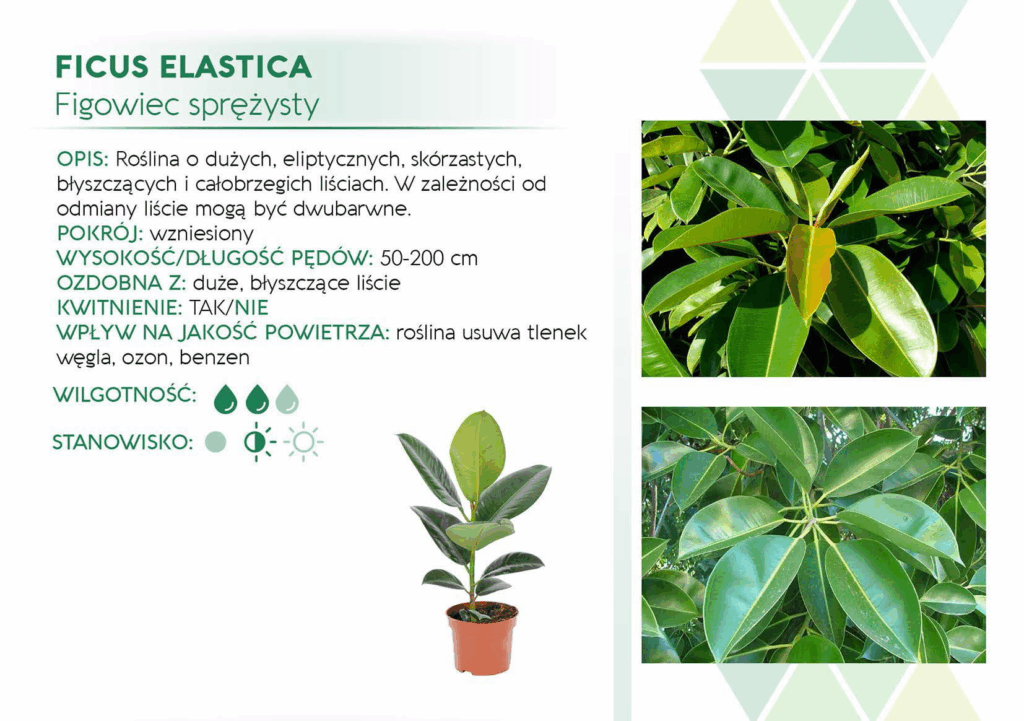
The large, leathery leaves of Ficus elastica are not just decoration. It’s real biological surface area that supports indoor air quality and helps maintain a stable microclimate. The plant reduces the presence of pollutants such as benzene, ozone, and carbon monoxide, which directly translates to the impact of vegetation on office workers’ well-being and their daily work comfort.
In office spaces, this has very concrete meaning:
- improves breathing comfort,
- supports concentration and focus,
- reduces feelings of fatigue throughout the day.
Such action aligns with the principles of biophilia, where contact with natural greenery really affects people’s well-being, and doesn’t serve a purely decorative function. Additionally, plants like Ficus elastica help regulate air humidity and influence comfort of staying indoors for many hours.
Ficus elastica care in 4Nature System greenery
The rubber plant is a predictable plant in maintenance, which is hugely important in commercial spaces. It doesn’t require complicated procedures or frequent intervention.
The most important care principles are:
- moderate watering – without overwatering,
- good air circulation without drafts,
- periodic cleaning of leaves from dust,
- stable temperature throughout the year.
In our 4Nature System, care is additionally supported by technology and greenery service, which allows us to maintain aesthetics and plant health for longer. Green wall care is based here on regular irrigation control, stable growth conditions, and ongoing plant observation, thanks to which the greenery looks good not only right after installation, but also in everyday use.
Why does Ficus elastica work well in modern offices?
Ficus elastica is a plant that doesn’t dominate the space, but clearly organizes it. It gives a sense of stability, naturalness, and quality. In green walls and furniture with built-in vegetation, it creates a calm background for work, meetings, and daily team functioning.
That’s exactly why we use it so often in our 4Nature System projects – where greenery is not only supposed to look good, but also really work for people’s comfort and the company’s image.
Frequently asked questions about Ficus elastica
Is Ficus elastica suitable for green walls and vertical gardens?
Yes, Ficus elastica does well in vertical systems thanks to stable growth and high tolerance for indoor conditions. It’s a predictable and safe plant in long-term implementations.
What light is best for Ficus elastica in the office?
Bright, diffused light works best, but the plant also tolerates partial shade well. Direct sunlight is not necessary and can cause leaf stress.
Does Ficus elastica affect indoor air quality?
Yes, large leaves help reduce pollution and stabilize the interior microclimate. This translates to better work comfort and user well-being in the space.
Is Ficus elastica difficult to care for?
No, it’s one of the easier plants to maintain in commercial spaces. Moderate watering and stable conditions are enough, without frequent changes.
Why is Ficus elastica often chosen for modern offices?
Because it combines aesthetics with functionality and doesn’t dominate the interior. It fits well into projects where greenery is meant to support people’s comfort and the company’s image, not just be decoration.
Sources:
https://en.wikipedia.org/wiki/Ficus_elastica https://www.cabidigitallibrary.org/doi/full/10.1079/cabicompendium.24090 https://www.nature.com/articles/s4159801709873-z