
Isolepis cernua – a light plant for vertical gardens and systemic greenery
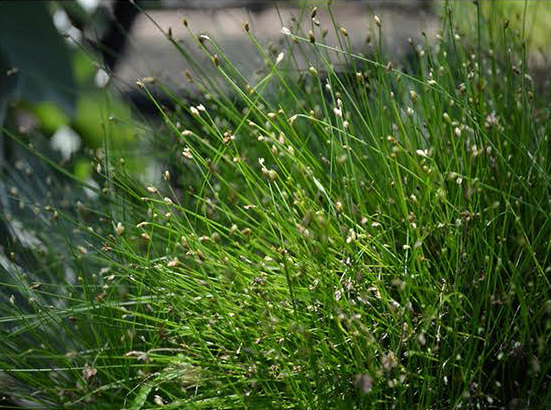
Isolepis cernua, also known as fiber optic grass, is a plant that fits perfectly in modern interiors. It has thin, delicate stems that naturally droop and “work” in space – they are neither stiff nor visually heavy. Thanks to this, it works very well in vertical compositions, where we care about lightness, rhythm and a natural greenery effect.
In our 4Nature System, Isolepis cernua plays the role of a plant that organizes the entire composition. It adds depth to the green wall, softens its perception and makes the whole look more natural and calm. This is exactly the type of plant that “creates atmosphere” – both in offices and in hotels or public spaces, where greenery should not only look good, but also simply feel good.
Isolepis cernua – occurrence and natural environment
Isolepis cernua is a plant that simply likes moisture. It feels best where the soil rarely dries out – in swampy areas, near water and in coastal zones. It occurs in various parts of the world, including Europe, Africa, Australia and New Zealand. In short, “wet ground” is its natural environment and nothing surprises it here.
In nature, Isolepis cernua grows in compact, clumped clusters. Thanks to this, it holds well to the substrate and maintains its form even when moisture changes. This is precisely why it works so well in modern greenery systems – you could say it simply has it in its blood.
In practice, this means that Isolepis cernua:
- tolerates constant moisture well,
- grows calmly and predictably,
- creates a light, soft structure that combines nicely with other plants.
That’s why in green walls and vertical gardens it is willingly chosen where a natural, “flowing” greenery effect is important. It works as a green curtain or a delicate background for other species. Without being intrusive, without chaos – it simply does its job and looks good.
Isolepis cernua – light requirements and conditions in vertical gardens
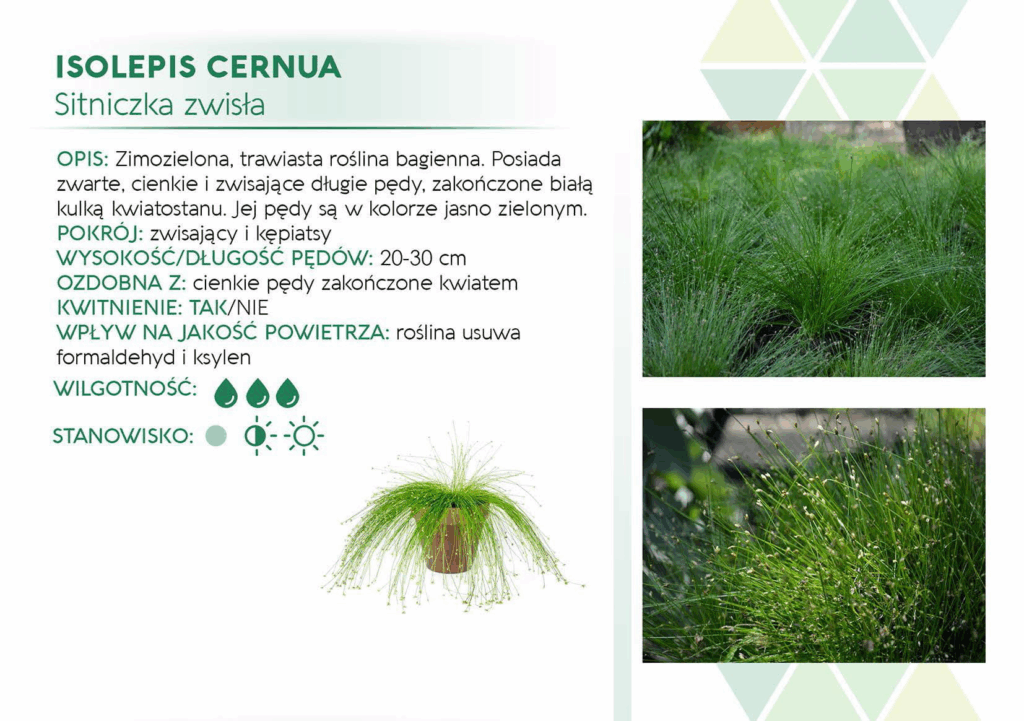
Isolepis cernua likes bright places, but without harsh sun. It feels best in diffused light, which is why it works well in offices with large windows. Direct sun is not necessary.
The second important thing is moisture. This plant doesn’t like drying out and grows best when the substrate is constantly moist. In vertical gardens and furniture with greenery, the irrigation system takes care of this automatically, so you don’t have to deal with it on a daily basis.
Isolepis cernua:
- likes bright, calm light,
- doesn’t need direct sun,
- grows best with constant moisture.
It works well both in simpler modules, such as 4Nature Basic, as well as in larger forms, e.g. 4Nature N’joy or 4Nature Amstel. Its thin, drooping stems add lightness to the entire arrangement. Under good conditions, it looks good for a long time and doesn’t cause problems.
Isolepis cernua – air quality and employee wellbeing
Although Isolepis cernua doesn’t catch the eye at first glance, its presence in a space really matters. It’s a plant that works calmly and discreetly, but affects how we feel indoors. It helps reduce some compounds present in the air, such as formaldehyde or xylene, which fits well in offices where comfort and focus count.
Furniture with built-in garden with Isolepis cernua also improves the microclimate of the room. The interior becomes more pleasant, “lighter” in perception and less office-like. Greenery helps quiet the space and makes it less harsh and austere.
In practice, Isolepis cernua:
- supports air quality,
- gives a sense of freshness,
- helps create a calmer atmosphere.
This approach fits well with the idea of biophilic design and observations regarding the impact of vegetation on the well-being of office workers. On a daily basis, this means simply one thing: a place where it’s better to work and better to be – both for the team and for guests.
Isolepis cernua – maintenance in 4Nature System greenery systems
Maintenance of Isolepis cernua in professional greenery systems is relatively simple and predictable. The plant doesn’t require intensive trimming – treatments are mainly limited to periodic leveling of stems and checking the condition of clumps. Thanks to automatic irrigation, key water needs are constantly met, which minimizes the risk of drying out.
In office conditions, the plant responds well to constant temperature and lack of drafts. This is precisely why Isolepis cernua is willingly used by us in our freestanding green walls and 4Nature System vertical gardens – as a stable, aesthetic and easy-to-maintain species in the long term, which actually supports the quality of commercial spaces.
Frequently asked questions about Isolepis cernua
Is Isolepis cernua suitable for vertical gardens?
Yes, it’s a plant very well adapted to vertical greenery. It likes moisture and grows predictably, which is crucial in vertical systems.
What light is best for Isolepis cernua?
It feels best in bright, diffused light. It doesn’t need direct sun and does well in offices with large windows.
Does Isolepis cernua require frequent maintenance?
No, its maintenance is simple and not time-consuming. In systems with automatic irrigation, it’s mainly limited to checking the appearance of stems.
Does Isolepis cernua affect air quality in the office?
Yes, it supports air quality and improves the indoor microclimate. Its presence makes the space calmer and more pleasant to perceive.
Where does Isolepis cernua work best in interior design?
It looks good in green walls, furniture with built-in greenery and vertical gardens. Especially where we care about a light, “flowing” greenery effect.
Sources:
https://en.wikipedia.org/wiki/Isolepis
https://vicflora.rbg.vic.gov.au/flora/taxon/5e54e9f8-7157-453d-9c0d-f2a0983f613b
https://pza.sanbi.org/isolepis
https://powo.science.kew.org/taxon/urn:lsid:ipni.org:names:324327-2