
Japanese fatsia – stable greenery for modern interiors and vertical gardens
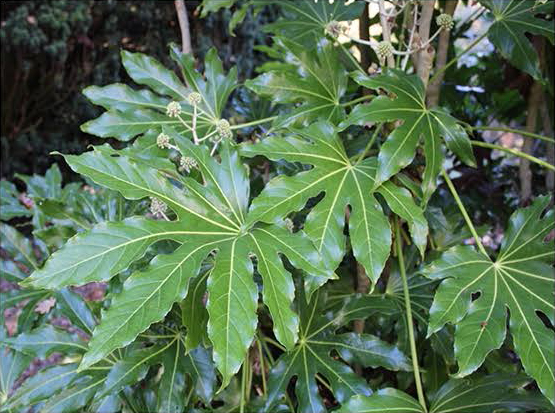
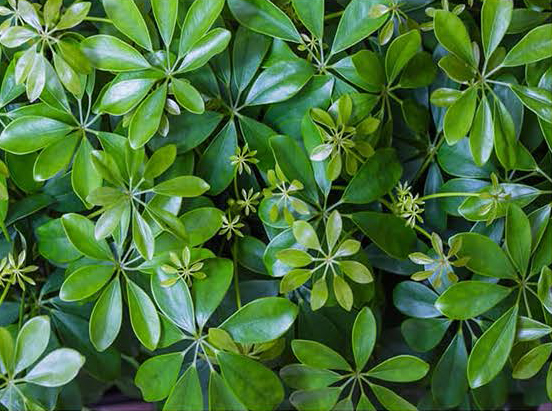
Fatsia japonica is one of those plants that makes an impression effortlessly. Large, glossy leaves build green mass, organize space and bring calm – exactly what is expected of greenery in offices and public spaces today. In 4Nature System, we use fatsia where predictability, resilience and the natural effect of “green presence” matter, not just a one-time visual impact.
Origin and character of Fatsia japonica
Fatsia japonica originates from East Asia – mainly from southern Japan and Korea. In nature, it grows in semi-shade conditions, often under the shelter of larger trees, where light is diffused and air humidity remains at a stable level. This is important information because these are exactly the conditions we try to recreate in modern interiors, especially where neurodesign in office spaces plays an increasingly important role.
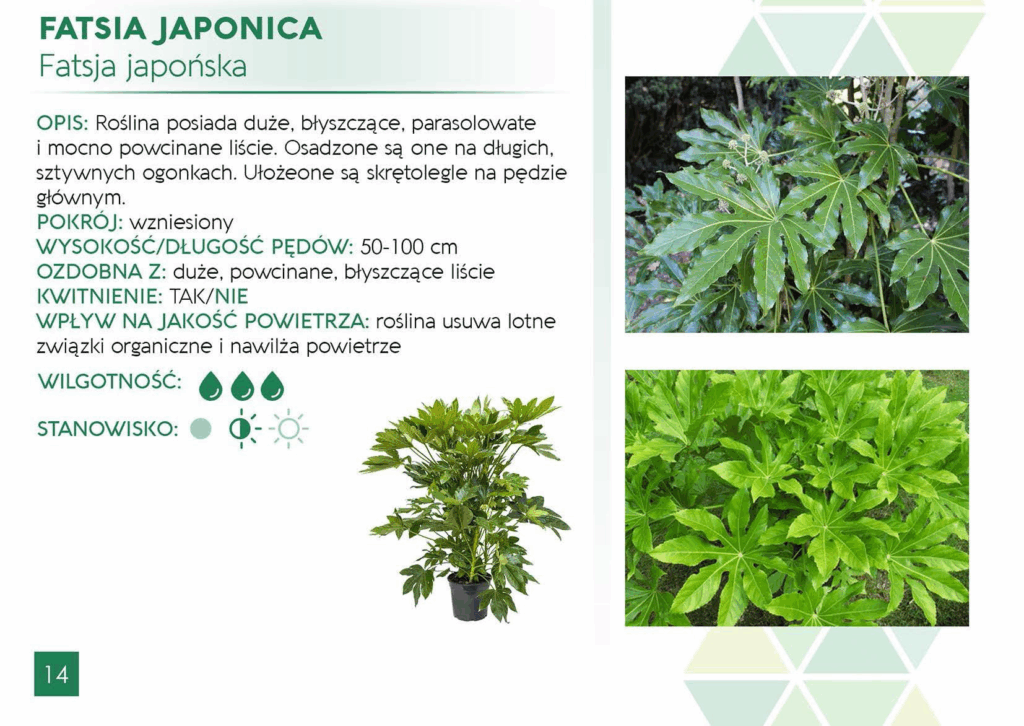
The plant has an upright habit, stiff petioles and an alternate leaf arrangement. Thanks to this, it looks organized even when it’s part of a larger plant composition. It doesn’t “spread” visually and doesn’t aggressively dominate the space – rather, it organizes it.
Fatsia japonica in vertical gardens – what light conditions does it need?
One of the reasons why Fatsia japonica works well in system greenery is its moderate light requirements. It grows best in semi-shade or diffused light. Direct sunlight is not necessary – and that’s a big advantage in offices, lobbies or corridors.
In systems such as living walls of plants or vertical gardens, fatsia maintains a stable habit and doesn’t cause maintenance problems.
In practice, this means that:
- it tolerates lower light intensity well,
- it doesn’t require frequent growth corrections,
- it maintains leaf aesthetics for a long time.
It’s a plant that “does its thing” in the background and doesn’t demand constant attention.
Air quality and impact on employees of Fatsia japonica
The large, leathery leaves of fatsia are not just decoration. Their surface really affects the interior microclimate. The plant helps reduce the presence of volatile organic compounds and supports maintaining proper air humidity. This is particularly important in office spaces, where dry air is a daily reality.
Greenery – including that in the form of furniture with built-in vertical garden – acts on people a bit like a break from stimuli. Fatsia, thanks to the calm form of its leaves, promotes concentration and reduces tension. It doesn’t distract, doesn’t “shout” with color. It simply is.
If you’re interested in the broader context, it’s worth checking out the post where we talk about the impact of vegetation on the well-being of office workers.
What does Fatsia japonica care look like in system greenery?
From the point of view of greenery service, Fatsia japonica is a rewarding plant. It likes regular, moderate watering and increased air humidity, but doesn’t react violently to minor fluctuations in conditions. That’s precisely why it works so well in solutions such as vertical garden, where predictability and stability of plants in the long term is crucial.
The most important care principles:
- moderate watering, without flooding the system,
- permeable substrate,
- periodic cleaning of leaves from dust,
- no need for intensive pruning.
In our 4Nature System, fatsia works well with irrigation automation and doesn’t require individual treatment. Thanks to this, office arrangement with plants remains aesthetic and cohesive on a daily basis, without the need for constant corrections or service interventions.
Fatsia japonica in 4Nature System solutions
Fatsia japonica often appears in our projects as an element of a larger whole – both in green walls and in furniture with built-in greenery. It fits well in solutions such as:
- 4Nature Basic – where mobility matters,
- 4Nature N’joy – as a green partition,
- 4Nature Amstel – in common spaces.
It’s a plant that doesn’t impose itself with form, but consistently builds the quality of green arrangement. And that’s exactly why we reach for it so often in 4Nature System.
Frequently asked questions about Fatsia japonica
Is Fatsia japonica suitable for offices with limited access to daylight?
Yes, fatsia tolerates semi-shade and diffused light well, so it works in offices, lobbies and corridors. It doesn’t require direct sunlight, which makes it a safe choice for interiors.
Will Fatsia japonica work in a vertical garden?
Yes, it’s a stable and predictable plant that functions well in vertical greenery systems. Its habit and growth rate favor the long-term aesthetics of a green wall.
How often should Fatsia japonica be watered in system greenery?
Watering should be moderate and regular, preferably based on irrigation automation. The plant doesn’t like overwatering, but responds well to constant, controlled moisture.
Does Fatsia japonica affect air quality in the office?
Yes, its large leaves support humidity regulation and help reduce the presence of volatile organic compounds. Thanks to this, it positively affects the microclimate and work comfort.
Does Fatsia japonica require frequent maintenance treatments?
No, it’s an undemanding plant that tolerates minor fluctuations in conditions well. With basic care, it maintains an aesthetic appearance for a long time.
Sources:
https://www.medianauka.pl/Fatsia-japonica
https://pl.wikipedia.org/wiki/Fatsja_japońska
https://plants.ces.ncsu.edu/plants/fatsia-japonica/common-name/figleaf-palm