
Maranta leuconeura ‘Fascinator Tricolor’ – an ornamental plant for modern interiors
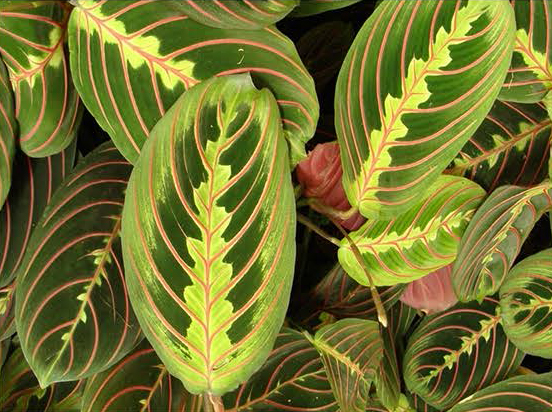
Maranta leuconeura ‘Fascinator Tricolor’ is one of the most decorative tropical plants used in contemporary interior design. Its intensely colored leaves, velvety texture, and characteristic vein pattern make the plant not only fulfill a biological function but become a full-fledged element of spatial architecture. For this reason, maranta is used both in classic plant compositions and in solutions such as vertical gardens.
Maranta leuconeura ‘Fascinator Tricolor’ – origin and growth habit
Maranta Fascinator originates from the humid, tropical forests of South America, where it naturally grows in the shade of taller plants. Its natural environment shapes characteristics that make the plant very well suited to indoor conditions and does not require intense sunlight.
Key characteristics resulting from the natural origin of Maranta Fascinator:
- preference for diffused light and partial shade,
- low, creeping habit conducive to composition density,
- ability to form dense, compact clumps.
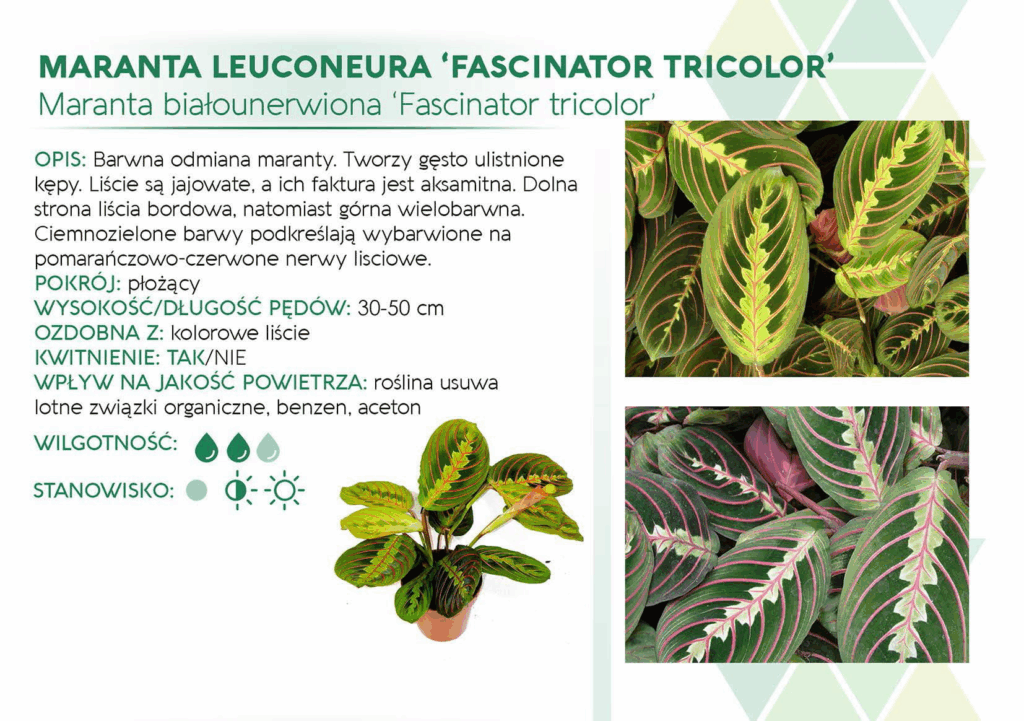
Thanks to these properties, maranta typically reaches 30–50 cm in height and effectively fills the lower zones of green compositions. Its form allows for building cohesive, stable plant arrangements, particularly in systemic and vertical greenery projects.
Maranta leuconeura ‘Fascinator Tricolor’ – leaves and aesthetic qualities
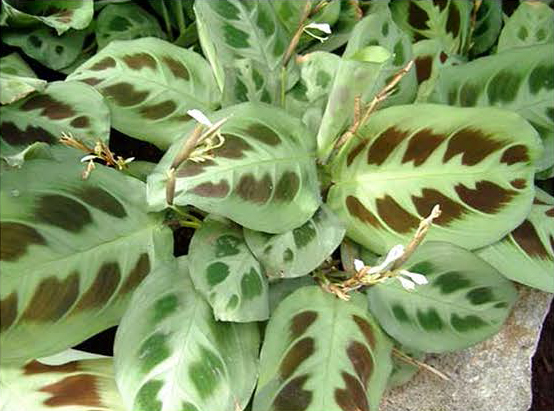
The greatest asset of Maranta Fascinator is its leaves, which play a key role in the perception of the entire plant composition. Their form and coloration make the plant immediately catch the eye and give the interior a distinctive, natural character.
Leaf characteristics of Maranta Fascinator important in interior design:
- oval shape and velvety surface texture,
- multicolored coloration with distinct orange-red veins,
- contrast between the green upper and burgundy lower side of the leaf.
The decorative quality of Maranta Fascinator leaves makes the plant often used as an element building the “soft structure” of greenery in modern arrangements. A similar role of leaves and plant textures in spatial design is described more broadly in our post about houseplants suitable for green walls, showing how conscious species selection affects the perception and functionality of green installations.
Maranta leuconeura ‘Fascinator Tricolor’ as a “prayer plant”
Maranta is also known as a prayer plant. Its leaves respond to the daily rhythm – during the day they remain spread out, while in the evening they rise upward. This phenomenon, called nyctinasty, gives the plant a dynamic, almost interactive character, which further strengthens the connection of space users with nature.
This aspect is often emphasized in biophilic concepts. If you’re interested in the impact of biophilia on office design and user comfort, it’s worth exploring the material where we develop this topic in a broader context.
Maranta leuconeura ‘Fascinator Tricolor’ in systemic greenery and furniture
Thanks to its stable growth and moderate requirements, Maranta Fascinator works very well in systemic greenery. It is willingly used in furniture with built-in vertical gardens, where form predictability and lasting visual effect matter. It composes perfectly with solutions such as 4Nature Basic, 4Nature N’joy, and 4Nature Amstel, where it serves as a filling and organizing plant in the composition.
Maranta leuconeura ‘Fascinator Tricolor’ and air quality and user comfort
Maranta has a beneficial effect on the microclimate of interiors, supporting environmental quality where space users spend time. Its presence is significant not only visually but also functionally, especially in enclosed spaces.
Key properties of Maranta in the context of interior microclimate:
- help in removing volatile organic compounds such as benzene or acetone,
- support in maintaining appropriate air humidity levels,
- beneficial impact on air quality in rooms.
In office and commercial spaces, this translates to improved work comfort and concentration. The presence of plants such as maranta also positively affects user well-being and perception of the entire space.
Maranta leuconeura ‘Fascinator Tricolor’ – a safe choice for public spaces
An important advantage of Maranta Fascinator is its non-toxicity. The plant is safe for humans and animals, making it an appropriate choice for offices, hotels, receptions, and other shared spaces where safety and durability of applied green solutions are priorities.
Maranta leuconeura ‘Fascinator Tricolor’ combines high aesthetic value, functionality and compliance with the idea of modern, sustainable interior architecture – which is why it is a proven element of professional 4Nature System greenery implementations.
Frequently asked questions about Maranta Fascinator
Is Maranta Fascinator suitable for interiors with limited light access?
Yes, the plant grows best in diffused light and partial shade, so it works well in offices and spaces without direct sunlight.
What height does Maranta Fascinator reach in indoor conditions?
It typically grows to about 30–50 cm, forming low, dense clumps with a creeping habit.
Is Maranta Fascinator safe for humans and animals?
Yes, it is a non-toxic plant, making it a safe choice for public spaces, offices, and places where animals are present.
What humidity conditions are best for Maranta Fascinator?
The plant prefers elevated air humidity, typical of interiors with systemic greenery or assisted humidification.
Why do Maranta Fascinator leaves rise in the evening?
This is a natural phenomenon of nyctinasty, related to the plant’s daily rhythm and its adaptation to light conditions.
Sources:
https://www.gardenia.net/genus/maranta-leuconeura-prayer-plant