
Maranta leuconeura ‘Kerchoveana’ – a decorative plant for modern interiors and vertical gardens
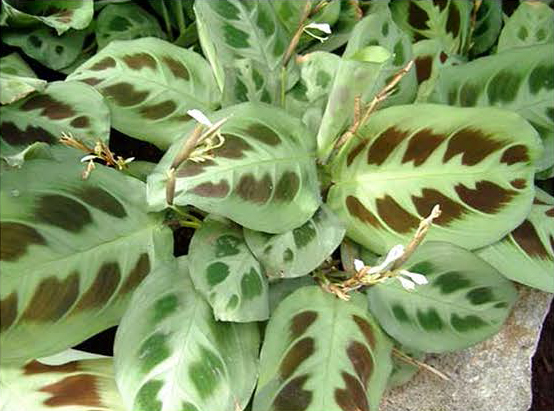
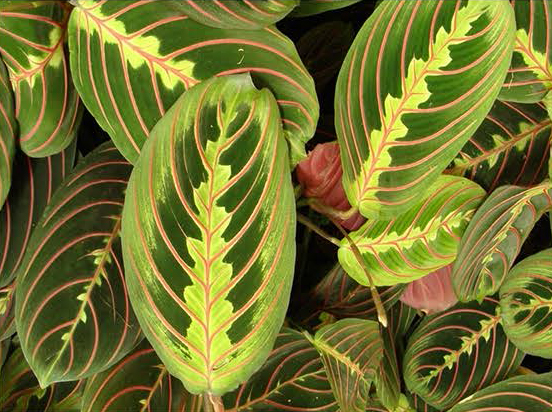
Maranta leuconeura ‘Kerchoveana’, also known as white-veined maranta, is a plant valued in interior design projects for its distinctive, patterned foliage and calm, trailing habit. Its light green, oval leaves adorned with symmetrical brownish-green spots create an effect of natural rhythm that fits perfectly into biophilic concepts. Thanks to this, maranta serves not only a decorative function but also builds a friendly, harmonious character of office and commercial spaces.
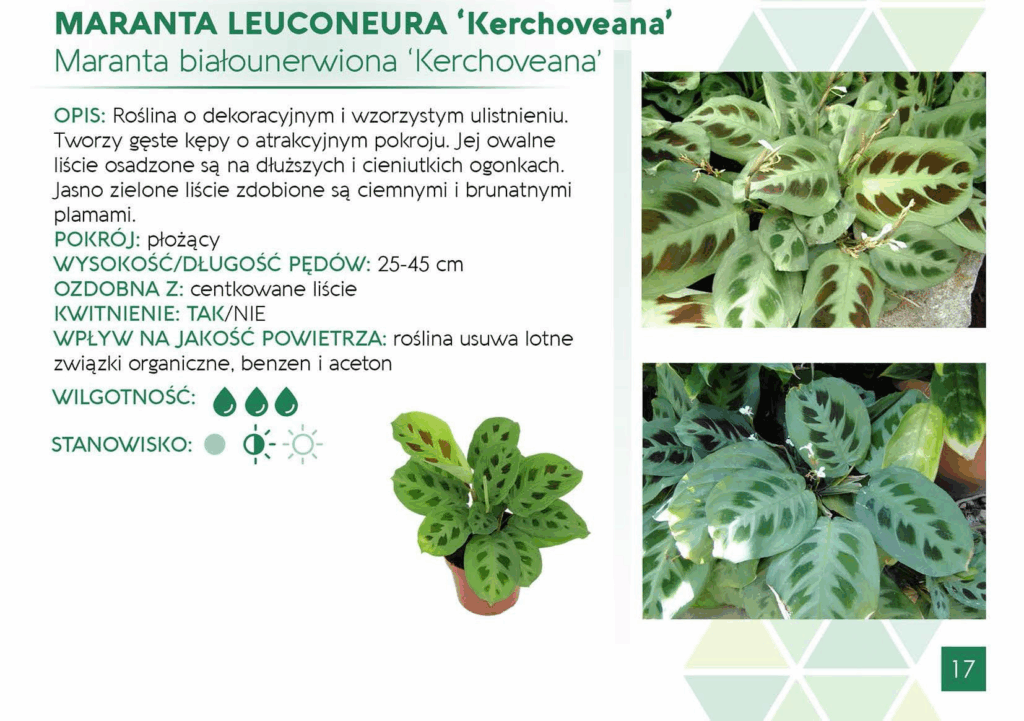
The plant forms dense clumps and typically reaches 25–45 cm in height, spreading horizontally, which makes it particularly useful in systematic greenery compositions. Its form is predictable and stable, which is why it is often used in projects such as custom living walls and modern vertical gardens, where aesthetics must go hand in hand with growth control.
Habit and significance in systematic greenery
The trailing character of maranta means that the plant naturally fills the lower and middle parts of green walls, building a soft, cohesive structure without a chaotic effect. Leaves set on thin stalks delicately arrange themselves in space, allowing designers to precisely shape the vertical composition. Unlike plants with dynamic growth, maranta does not dominate the arrangement but subtly complements it, visually stabilizing the entire wall.
Thanks to these features, the plant also works very well in solutions such as furniture with built-in vertical gardens, where form predictability and long-lasting aesthetics are crucial. Maranta is often used in 4Nature Basic, 4Nature N’joy, and 4Nature Amstel systems, where it plays the role of a “calming” plant in the composition and gives it natural depth.
Light and humidity requirements in office spaces
Key light and environmental conditions for maranta:
- diffused light or partial shade,
- no direct sun exposure,
- increased air humidity,
- stable microclimate conditions.
The plant likes increased air humidity, so it functions best in greenery systems equipped with automatic irrigation and microclimate control. Under such conditions, maranta maintains a compact form, intense leaf color, and high resistance to environmental stress, which is particularly important in spaces used by many people.
Impact on air quality and user wellbeing of Maranta ‘Kerchoveana’
Maranta leuconeura ‘Kerchoveana’ positively affects indoor air quality – it helps reduce volatile organic compounds such as benzene and acetone, which is significant especially in modern, airtight office buildings. Its presence supports the concept of green, healthy workplaces, where vegetation becomes an integral element of architecture.
The psychological aspect is also significant. The regular, daily movement of maranta leaves (so-called nyctinasty) introduces a subtle element of “life” into the interior, which has a calming effect and promotes concentration. This phenomenon fits perfectly into the approach to workspace design based on biophilia.
Application of Maranta ‘Kerchoveana’ in commercial projects
Due to its non-toxicity and delicate character, Maranta is safe in spaces accessible to a wide range of users. It works excellently in:
- open space offices,
- relaxation and regeneration zones,
- hotel lobbies and receptions,
- coworking and service spaces.
Its presence strengthens the company’s image as modern, responsible, and caring about user comfort, while fitting into ESG strategies and sustainable development.
Maranta ‘Kerchoveana’ as a conscious choice for green walls
Maranta leuconeura ‘Kerchoveana’ is a plant that combines aesthetics, functionality, and stability, which is why it is a proven element of professional systematic greenery projects. Its calm growth, decorative leaves, and good adaptation to indoor conditions make it a popular choice for vertical gardens and furniture with built-in greenery, where long-lasting visual effect and user comfort matter.
This approach to conscious plant selection, tailored to the character and function of the interior, has been discussed in detail in the post about how to design greenery in the office, showing step by step how to create spaces that support work comfort, aesthetics, and long-term functionality.
Frequently asked questions about Maranta ‘Kerchoveana’
Does Maranta leuconeura ‘Kerchoveana’ grow well in partial shade?
Yes, it develops best in diffused light and partial shade, without direct sunlight.
What height does Maranta leuconeura ‘Kerchoveana’ reach?
The plant typically grows to 25–45 cm in height, spreading mainly horizontally.
Does Maranta leuconeura ‘Kerchoveana’ require high air humidity?
Yes, it prefers increased humidity, which promotes healthy and intensely colored leaves.
Is Maranta leuconeura ‘Kerchoveana’ safe for people and animals?
Yes, it is a non-toxic plant and safe in functional spaces.
Why do Maranta leuconeura ‘Kerchoveana’ leaves rise in the evening?
This is a natural phenomenon of nyctinasty, related to the plant’s circadian rhythm.
Sources:
https://www.gardenia.net/plant/maranta-leuconeura-var-kerchoveana-prayer-plant
https://en.wikipedia.org/wiki/Maranta_leuconeura
https://www.gardenia.net/genus/maranta-leuconeura-prayer-plant