
Monstera deliciosa – an icon of greenery in modern interiors
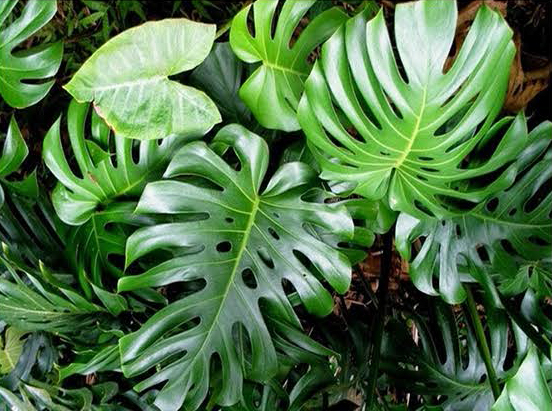
Monstera deliciosa, also known as the Swiss cheese plant, is one of the most recognizable plants used in contemporary commercial interior design. Its spectacular, large leaves with characteristic fenestrations make the plant serve not only a biological function but become an integral element of spatial architecture. In offices, hotel lobbies, receptions, or common areas, monstera creates a strong visual effect, emphasizing the modern and prestigious character of the interior.
Growth habit and dynamics of Monstera deliciosa in commercial projects
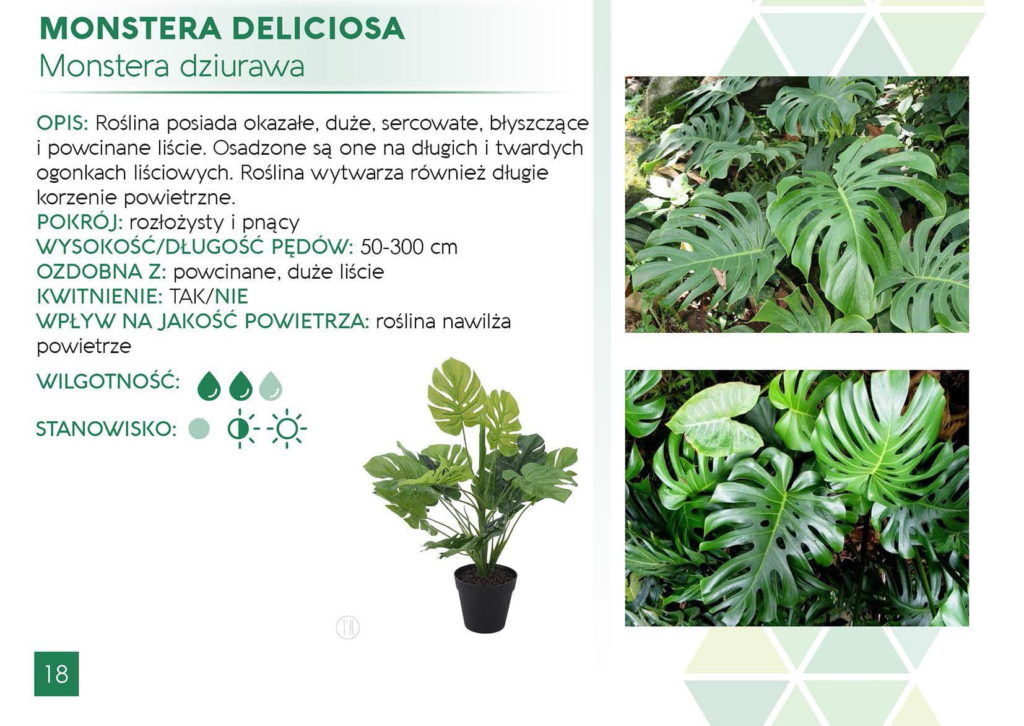
Monstera deliciosa is a plant with a sprawling, climbing habit that produces long shoots and characteristic aerial roots in natural conditions. In interior arrangements, its shoots can reach from 50 to even 300 cm in length, allowing for the design of multidimensional, green compositions. Thanks to its stable growth and predictable form, monstera works perfectly in solutions such as custom living walls and modern vertical gardens.
Additionally, the plant responds well to training and shaping, which gives designers great freedom in forming vertical compositions. Its expressive character means that monstera often plays the role of a dominant green accent that organizes space and gives it a distinctive, natural rhythm.
Large, fenestrated leaves as an element of interior architecture
The greatest decorative value of monstera lies in its impressive, heart-shaped, glossy leaves with natural perforations. Fenestration is not the result of damage, but a natural development process of the plant that gives it a unique, sculptural character. In office spaces, monstera leaves act as natural visual dividers, organizing space and introducing rhythm to the interior.
This is one of the reasons why monstera is readily used in concepts based on biophilia, where greenery serves not only an aesthetic function but also supports user wellbeing and spatial perception.
Impact of Monstera deliciosa on microclimate and user comfort
Monstera deliciosa positively affects interior microclimate because it supports natural air humidification. This is particularly important in air-conditioned offices where dry microclimate reduces work comfort. Using plants with large leaf surface area, such as monstera, actually supports employee wellbeing and fits into ESG strategies and modern approaches to workplace environment design.
Key effects of monstera presence in office spaces:
- improvement of air humidity in rooms,
- increased work comfort in air-conditioned environments,
- support for employee wellbeing and positive spatial perception.
Thanks to these properties, monstera is not merely a decorative element but serves as an active component of the interior’s green infrastructure. In the long term, its presence translates into better user wellbeing and consistency of the arrangement with modern design standards and ESG goals.
Light and humidity requirements in office spaces
Monstera develops best in locations with bright, diffused light, although it also tolerates partial shade well. This allows it to be used deep within interiors, away from direct sunlight. It prefers higher air humidity, which makes it an ideal species for systemic greenery where conditions are technologically stabilized and support the natural interior microclimate.
If you’re interested in how green walls actually regulate air humidity levels and affect user comfort, it’s worth reading the material where we discuss this process in detail.
Monstera in systemic greenery and furniture with built-in gardens
Due to its growth scale and impressive habit, monstera deliciosa works perfectly in solutions such as furniture with built-in vertical gardens. It can be used both in mobile modules like 4Nature Basic and in more extensive systems like 4Nature N’joy and 4Nature Amstel. Its presence strengthens the “green architecture” effect while organizing space and improving acoustics.
A conscious choice for modern projects
Why does monstera work well in commercial projects?
- Stable growth and predictable form throughout the year.
- Strong visual effect enhancing interior prestige.
- Good adaptation to office and public space conditions.
In systemic greenery, monstera ceases to be merely decoration and begins to serve as a cohesive, planned element of the arrangement. It becomes a full-fledged component of interior architecture that supports both the aesthetics of space and the comfort of its users.
Frequently asked questions about Monstera deliciosa
Is Monstera deliciosa a climbing plant?
Yes, monstera has a climbing habit and produces aerial roots that enable it to climb and form vertical structures.
What light is best for Monstera deliciosa?
It grows best in bright, diffused light but also tolerates partial shade well.
How large can Monstera deliciosa leaves get?
Mature monstera leaves can reach very large sizes and are distinguished by characteristic cuts and perforations.
Does Monstera deliciosa affect air humidity?
Yes, thanks to its large leaf surface area, it supports natural air humidification in rooms.
Is Monstera deliciosa easy to maintain?
Yes, monstera is a plant with stable growth and adapts well to interior conditions.
Sources:
https://www.gbif.org/species/144099000
https://www.proflowers.com/blog/monstera-deliciosa
https://en.wikipedia.org/wiki/Monstera_deliciosa