
Nephrolepis Exaltata – noble nephrolepis. An elegant fern for modern interiors
Nephrolepis Exaltata, known as the Boston fern, is one of the most recognizable and valued ferns used in interiors. This plant has been appearing for years in both private and commercial spaces, where the combination of aesthetics, functionality, and positive impact on room microclimate matters. Its light green, long leaves bring a sense of freshness and natural lightness to the interior.
Hanging habit and cascading form of Nephrolepis Exaltata leaves
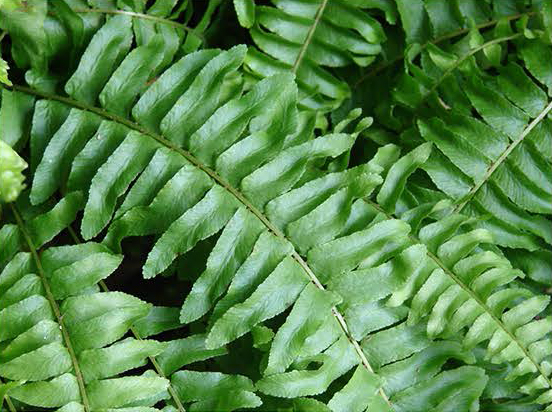
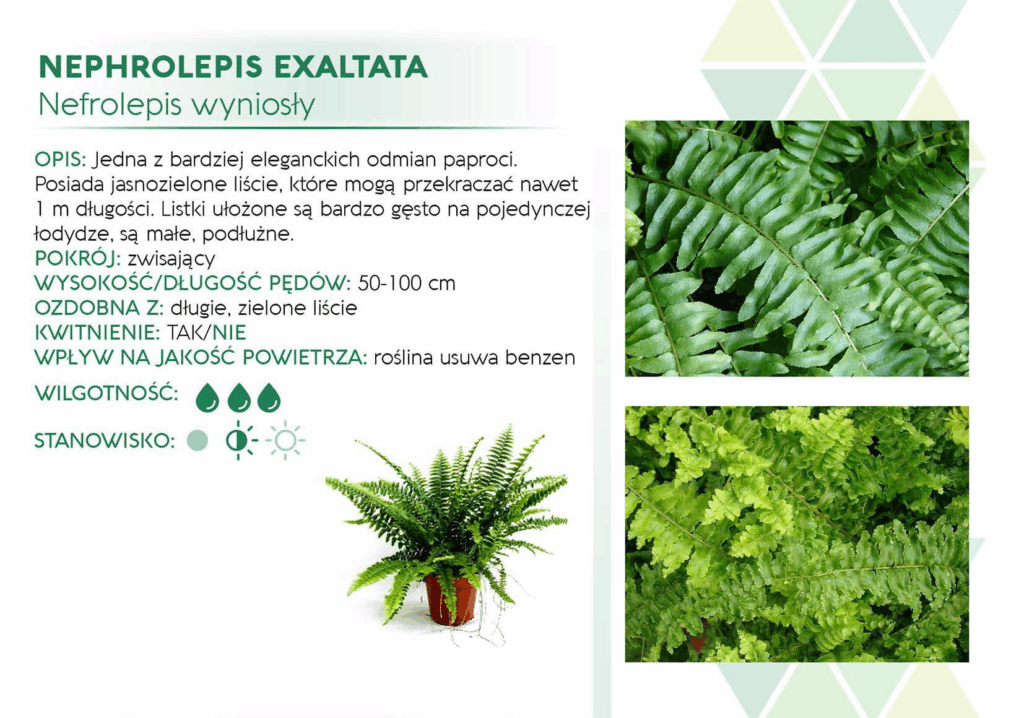
The characteristic feature of Nephrolepis is its hanging habit and very densely arranged, small and elongated leaflets mounted on individual stems. The leaves can reach up to 50–100 cm in length, creating the effect of a soft, green cascade. This form makes the plant visually “work” in the space and gives interiors lightness.
Nephrolepis works particularly well as:
- a plant for hanging pots,
- an element of tall planters and displays,
- a component of larger plant compositions,
- part of green walls and vertical gardens.
Thanks to its plasticity and natural leaf arrangement, Nephrolepis easily adapts to different types of arrangements. It allows building green accents in both private and commercial spaces, without overwhelming the interior and without the need for complicated compositional treatments.
Ornamental plant for interiors – how does Nephrolepis Exaltata build the character of a space?
Nephrolepis Exaltata is ornamental primarily due to its long, intensely green leaves. It’s a plant that doesn’t dominate the space, but subtly fills it, introducing harmony and natural rhythm. For this reason, it is very often used in projects such as custom living walls or vertical gardens, where both decorativeness and the ability of plants to create cohesive, vertical compositions matter.
Air humidity and the condition of Nephrolepis Exaltata
Nephrolepis feels best in an environment with increased air humidity, which makes it a natural choice for interiors where systemic greenery is used. Appropriate humidity conditions directly affect the plant’s condition and stability of its growth. Thanks to this, Nephrolepis maintains a fresh appearance for a long time.
Increased humidity is particularly beneficial for:
- maintaining the intense, green color of leaves,
- preserving their elasticity and firmness,
- limiting drying and browning of tips,
- stable development of the entire plant.
In practice, this means that this fern works perfectly in office spaces, hotels, and common areas, where vegetation also serves a microclimate-regulating function. The relationships between greenery and air humidity are described in more detail in the article about the impact of green walls on air humidity.
Location and light – where does Nephrolepis Exaltata grow best?
Nephrolepis Exaltata shows great flexibility regarding location. It grows well in bright, semi-shaded places, and even in diffused light, which significantly facilitates its use in different parts of a building. This feature makes Nephrolepis often used as a modular plant in furniture installations and mobile systems.
Indoor air quality and the presence of Nephrolepis Exaltata
One of the most important advantages of Nephrolepis is its positive impact on air quality in rooms. This plant helps remove benzene from the environment, supporting the creation of a healthier indoor environment. This is particularly important in intensively used spaces.
In practice, this means benefits such as:
- improved comfort of staying in rooms,
- support for air quality in work and service areas,
- beneficial impact on indoor microclimate,
- better conditions for space users.
For this reason, Nephrolepis often appears in greenery projects for offices, receptions, and public spaces, where air quality has real significance for the daily functioning of people staying in a given interior.
Flowering of Nephrolepis Exaltata
Nephrolepis Exaltata is not a flowering plant in the traditional sense. Its decorative value is based solely on the leaves, which in practice turns out to be a huge advantage – the plant maintains a consistent, attractive appearance throughout the year, without periodic aesthetic fluctuations.
Nephrolepis in green furniture and modern arrangements
Thanks to its hanging habit and resistance to indoor conditions, Nephrolepis is ideal for use in furniture with built-in vertical garden. Its form allows for natural guidance of leaves down the structure, without disturbing the aesthetics of the entire installation. The plant fits well in the stable environment of systemic green furniture, maintaining an attractive appearance for a long time.
Nephrolepis also works particularly well in solutions such as:
- 4Nature Basic, designed for simple and functional arrangements,
- 4Nature Njoy, supporting flexible space shaping,
- 4Nature Amstel, used in shelving and modular installations.
As a modular plant, Nephrolepis also often appears in larger compositions. If you’re interested in houseplants that are suitable for green walls and allow creating stable, long-lasting arrangements, it’s worth reaching for material where we discuss proven species used in systemic implementations.
Frequently asked questions about Nephrolepis Exaltata
What location is best for Nephrolepis Exaltata?
It grows best in a bright place with diffused light or in semi-shade, without direct sunlight.
How often to water Nephrolepis Exaltata?
Watering should be done only after the top layer of substrate has dried.
Is Nephrolepis Exaltata suitable for offices and commercial spaces?
Yes, it does well in offices and interiors with air conditioning and limited daylight.
Does Nephrolepis Exaltata affect the indoor microclimate?
The plant supports natural air humidification and improves the comfort of staying in rooms.
Is Nephrolepis Exaltata difficult to care for?
No, it is a plant with low care requirements and stable growth.
Sources:
https://en.wikipedia.org/wiki/Nephrolepis_exaltata
https://www.gardenia.net/plant/nephrolepis-exaltata