Asplenium nidus – a tropical fern that brings a sense of calm to a space and enhances green walls
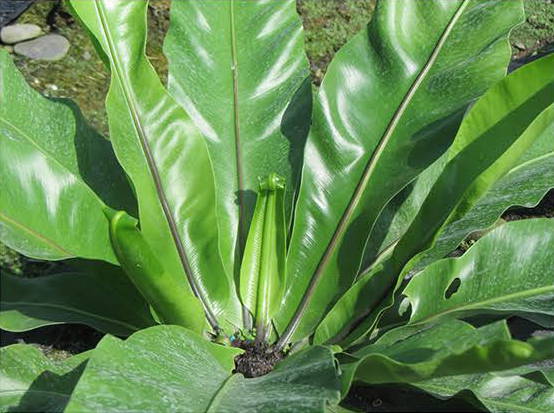
Asplenium nidus, commonly known as the bird’s nest fern, is one of those plants that doesn’t need a striking form to make an impression. Its glossy, light-green rosette of leaves brings order to a composition and introduces a natural rhythm into any interior. At 4Nature System, we frequently use it in office greenery projects because it’s predictable, safe, and performs exceptionally well in controlled vertical garden systems.
Asplenium nidus – a tropical plant in green walls
Asplenium nidus originates from the humid tropical forests of Asia, Australia, and the Pacific Islands. In nature, it grows as an epiphyte – settling on tree trunks and in bark crevices, where light is diffused and humidity is stable. It doesn’t need direct sunlight. It needs balance.
This characteristic is key when designing green systems for interiors. A plant accustomed to semi-shade and consistent humidity thrives in modern installations such as plant walls and larger vertical gardens.
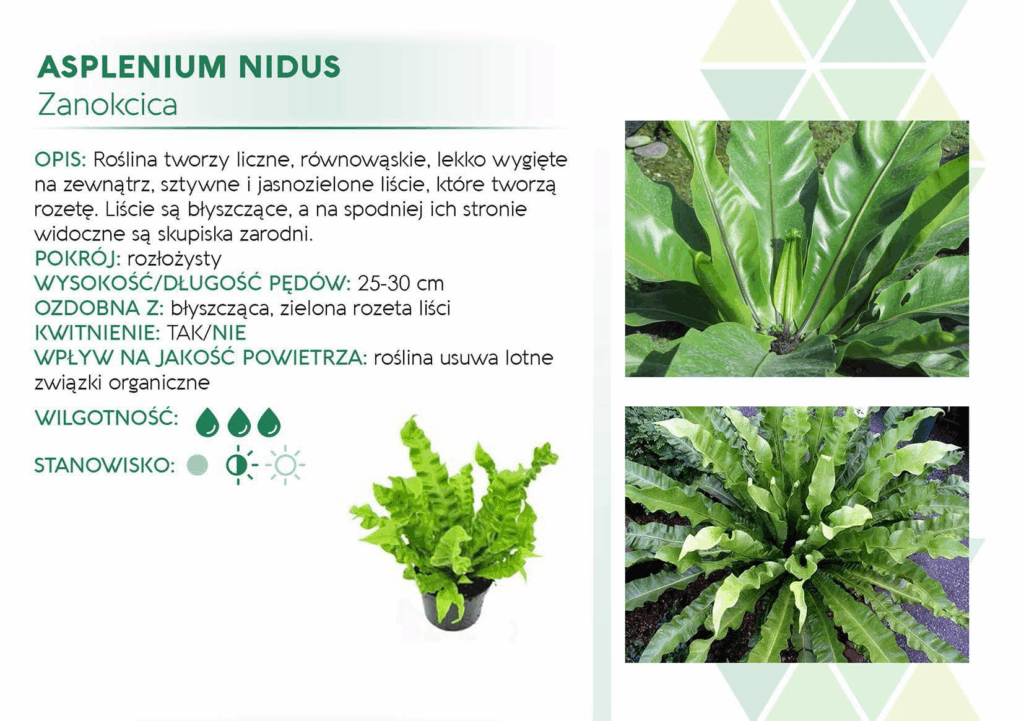
Its spreading habit and leaves approximately 25–30 cm in length create a natural, well-structured form. This is a plant that doesn’t dominate – it stabilises the composition.
Asplenium nidus in the office – light, humidity, and its ideal conditions
The bird’s nest fern grows best in bright, diffused light. No direct sun, which could scorch the leaves. In office environments, this means:
- semi-shaded positions,
- indirect light (e.g. near north-facing windows),
- LED supplemental lighting in vertical systems,
- air humidity at 60–80%,
- temperature ranging between 16–25°C.
This is precisely why Asplenium performs so well in our 4Nature System installations. In the controlled conditions provided by furniture with built-in vertical gardens – such as 4Nature Basic, 4Nature N’joy, or the modular 4Nature Amstel – the plant enjoys a stable environment and predictable growth. In commercial spaces, that matters enormously.
Asplenium nidus and air quality – more oxygen, less stress
The bird’s nest fern is more than a decoration. It’s a plant that removes volatile organic compounds from the air and genuinely improves the indoor microclimate. Its large leaf surface supports natural air humidification. In offices where air conditioning often dries out the space, this is a significant advantage.
At 4Nature System, we have been studying the impact of greenery on work comfort for years. Plants like Asplenium:
- improve concentration,
- reduce tension,
- dampen noise in open-plan spaces,
- support the biophilic character of an interior.
If the topic of greenery in the context of ESG and corporate image matters to you, take a look at our post explaining how plants help create offices that attract people. Because this isn’t just about aesthetics. It’s about people.
Simple care for the bird’s nest fern
This is one of the reasons we recommend it so often. The bird’s nest fern is relatively easy to maintain when provided with stable conditions.
The most important care guidelines:
- keep the substrate consistently slightly moist, but without waterlogging,
- water with soft water,
- avoid draughts,
- apply gentle fertilisation in spring and summer (half dose),
- reduce watering in winter.
In system-based installations, maintenance is automated and supported by a service team. This means the client never has to worry about the condition of the plants.
Why is Asplenium nidus a safe choice for modern installations?
Asplenium nidus has several characteristics that make it a “designer” plant:
- stable, spreading habit,
- does not require intense light,
- tolerates semi-shade well,
- safe for public spaces,
- creates a calm, elegant backdrop for the entire composition.
In our projects, we treat it not as a single accent, but as an element of a larger, thoughtfully designed green structure. It frequently serves as the foundation of compositions in green walls and system furniture that combines design with technology.
Asplenium nidus is an example of a plant that demonstrates modern interior architecture can go hand in hand with nature. And when nature is well designed – it genuinely begins to support both people and business.
Frequently asked questions about Asplenium
Is Asplenium nidus suitable for an office without large windows?
Yes. The bird’s nest fern grows well in bright, diffused light and tolerates semi-shade. In office spaces with limited access to natural light, it can be supported by LED supplemental lighting in vertical garden systems.
How often should Asplenium nidus be watered?
The substrate should remain consistently slightly moist, but not wet. Water moderately with soft water, avoiding water pooling in the leaf rosette.
Does Asplenium purify the air in an office?
Yes. The bird’s nest fern helps remove volatile organic compounds and supports natural air humidification. Thanks to its large leaf surface, it improves the indoor microclimate, which translates into greater comfort at work.
Is Asplenium nidus difficult to care for?
No. When provided with stable conditions – semi-shade, adequate humidity, and no draughts – it is a predictable and relatively easy plant to maintain, especially in automated systems.
Will Asplenium nidus work well in green walls and plant furniture?
Absolutely. Thanks to its spreading habit and moderate light requirements, it is a frequent choice in green walls and furniture with built-in vertical gardens, where controlled growing conditions are maintained.
Sources:
https://www.sciencedirect.com/topics/agricultural-and-biological-sciences/aspleniaceae
https://plantnet.rbgsyd.nsw.gov.au/cgi-bin/NSWfl.pl?page=nswfl&lvl=gn&name=Asplenium
https://cheekyplantco.com.au/blogs/plants-blog/bird-s-nest-fern-care-guide-cultivating-asplenium-nidus-in-your-home