
Aspidistra elatior – a hardy plant for offices, green walls and challenging environments
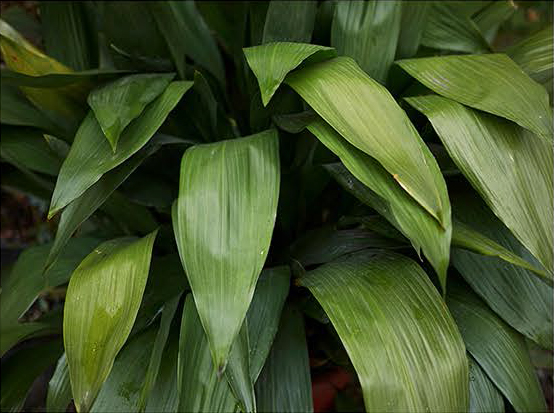
Aspidistra elatior, commonly known as the cast iron plant, has earned its nickname for good reason. It’s resilient, stable, and predictable. It tolerates shade, occasional drying out, and typical office conditions. That’s why at 4Nature System we frequently use it in office greenery projects, reception areas, and commercial spaces – both in custom living walls and modular solutions such as vertical gardens and furniture with built-in planting.
Aspidistra elatior’s natural habitat and its “iron” character
Aspidistra originates from southern Japan and Taiwan. In nature, it grows in the shade of deciduous forests, beneath the canopy of trees. It is an understorey plant. It doesn’t compete for sunlight. It thrives on patience and adaptation.
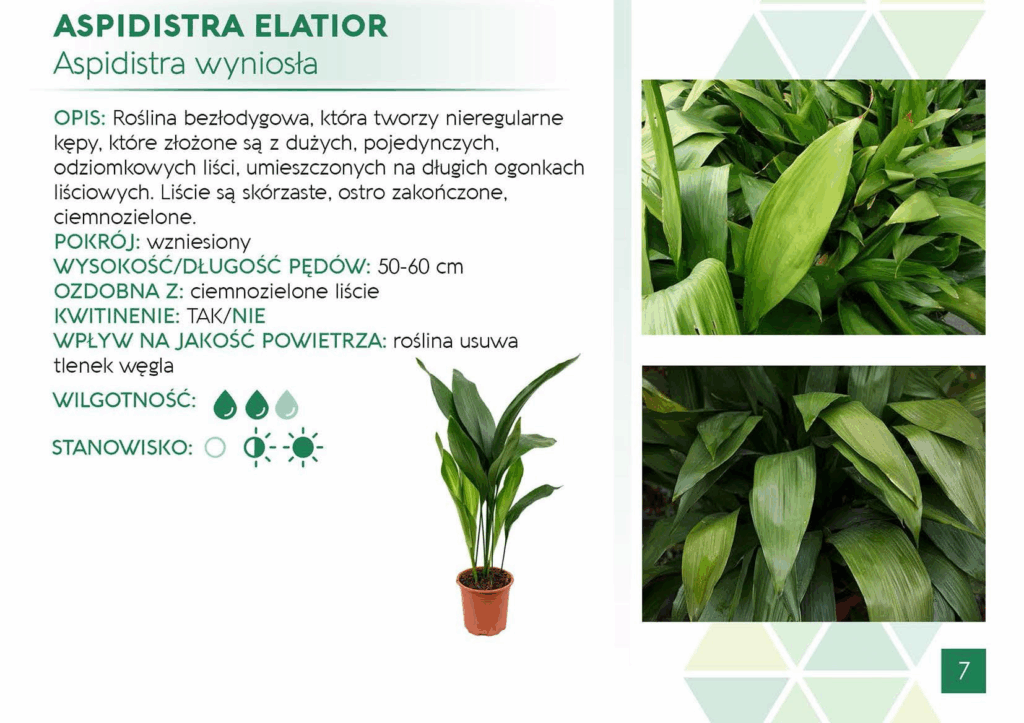
It forms rhizomes and grows to approximately 50–60 cm in height. Its leaves are:
- long and lanceolate,
- leathery,
- deep, intense green,
- elegant in form.
This natural adaptation to shade makes it an excellent choice for offices, corridors, and areas with limited access to natural light. That’s exactly why we use it in compositions for furniture with built-in vertical gardens, such as 4Nature Basic, 4Nature N’joy, and 4Nature Amstel. This is a plant that doesn’t dominate. It stabilises the composition.
Aspidistra elatior in the shade – ideal for vertical gardens
Aspidistra tolerates very low light. It thrives in semi-shade and in diffused light. Direct sunlight? Not necessary. In offices, this is a significant advantage. In vertical systems, predictability matters, and Aspidistra:
- grows slowly,
- does not require intensive supplemental lighting,
- tolerates occasional drying out,
- creates a stable, compact structure thanks to its rhizomes.
That’s why we use it both in classic compositions and in larger installations based on our 4Nature System technology.
If you’re interested in designing greenery in offices, check out our article. We share practical tips and explain the benefits of vertical gardens in commercial spaces.
A calm plant that improves air quality in the office
Aspidistra helps remove carbon monoxide from the air. This is not a plant that impresses briefly and fades. It’s a long-distance runner. In the context of modern offices, three things matter:
- a stable microclimate,
- stress reduction,
- visual organisation of space.
The deep green leaves have a calming effect. In open-plan spaces, they create visual “anchors”. Combined with our 4Nature System solutions, they genuinely support workplace comfort.
If you’re interested in the impact of plants on office employee well-being, visit our article where we explore the topic in depth.
How to care for Aspidistra elatior in the office?
This is the plant for those who don’t want to check soil moisture every day. All it needs is:
- moderate watering (1–2 times per week in summer),
- reduced watering in winter,
- repotting every few years,
- fertilising during spring and summer.
In offices, wiping dust from the leaves is also important. The leathery leaf blades are easy to keep in good condition.
If you’d like to learn more about plant care and adaptation in vertical systems, visit our blog. We cover maintenance principles and care for living walls.
Why does Aspidistra elatior work so well in commercial spaces?
At 4Nature System, we approach plants not just aesthetically, but systemically. Aspidistra elatior:
- tolerates variable conditions,
- is resistant to care mistakes,
- suits modern, minimalist interiors,
- creates a calm, biophilic backdrop.
Combined with our solutions – from vertical gardens, through furniture with built-in vertical gardens, to comprehensive living walls – it becomes an element that genuinely supports workplace comfort and company image. Because good office greenery is not decoration. It’s an investment in space, people, and the quality of the working environment.
Frequently asked questions about Aspidistra
Is Aspidistra elatior suitable for dark offices and rooms with limited natural light?
Yes, it is one of the most light-tolerant houseplants available. It thrives in semi-shade and even in very limited natural light. That’s why we frequently use it in corridors, reception areas, and open-plan spaces.
Will Aspidistra elatior work in living walls and vertical gardens?
Absolutely. It grows slowly, forms a compact structure, and doesn’t require intensive supplemental lighting, making it a stable element of vertical compositions. In 4Nature System installations, it serves as an organising plant that creates a calm backdrop.
How often should Aspidistra elatior be watered?
Watering should be moderate. In summer, 1–2 times per week is usually sufficient; in winter, less frequently depending on the room conditions. It’s important not to overwater, as excess moisture is more harmful to the plant than brief periods of dryness.
Does Aspidistra elatior improve air quality?
Yes, the plant supports natural air purification processes, including the reduction of carbon monoxide. In office spaces, its presence also influences the microclimate and the visual comfort of users. It supports employee well-being in a subtle yet long-lasting way.
Is Aspidistra elatior difficult to care for?
No, it is considered an exceptionally easy plant to maintain. It handles minor care mistakes, occasional drying out, and variable office conditions with ease. That’s why it is frequently chosen for commercial spaces where durability and predictability of greenery matter.
Sources:
https://identify.plantnet.org/k-world-flora/species/Aspidistra%20elatior%20Blume/data
https://www.plantsrescue.com/posts/aspidistra-elatior