
Flowers for bedroom – which plants will be a perfect choice?

You may have come across the popular belief that placing flowers in the bedroom is not the best idea. Nothing could be further from the truth! Below we debunk this myth and suggest which houseplants are best suited for the bedroom. Which plants work well in a dark bedroom? What is a safe and healthy plant for a child’s bedroom? You’ll find answers to these questions in this article too.
Flowers in the Bedroom and Air Quality – Can Bedroom Plants Really Be Harmful?
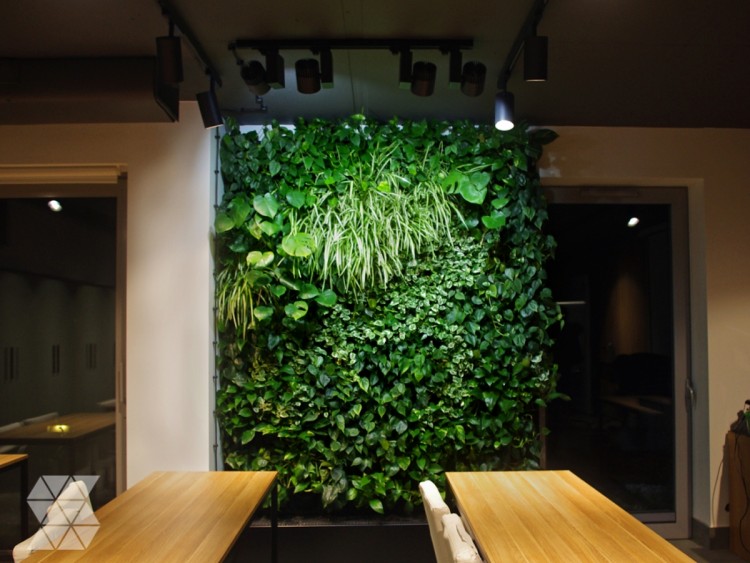
The misguided belief that bedroom plants can harm us stems from an exaggeration and distortion of the fact that plants take in oxygen at night and release carbon dioxide. This was said to make falling asleep harder, negatively affect sleep quality, and even cause breathlessness. Following this logic, placing plants in the bedroom would lead straight to death by suffocation. For such a scenario to occur, we would need to be in a completely airtight room with an enormous number of plants. Of course, both scenarios are utterly implausible, unless we were to create truly laboratory-like conditions and turn the bedroom walls into one giant vertical garden.
The Best Bedroom Plants Are Those That Not Only Decorate the Space but Also Improve Sleep Quality
Bedroom plants don’t have nearly as strong an effect as they’re accused of. Contrary to popular belief, placing them where we sleep is actually a very good idea – though it’s worth choosing them carefully. Some houseplants are better suited to the bedroom than others. These are CAM plants, naturally adapted to conserve water in dry and hot climates, and they are characterised by absorbing carbon dioxide at night. The secret lies in reversed photosynthesis – at night, these plants absorb CO₂. Bedroom plants for a good night’s sleep are an excellent idea – they will actually improve sleep quality rather than worsen it. Additionally, the very presence of plants helps reduce tension and stress, promoting relaxation.
Which Bedroom Plants Work Best – Large Specimens or Small Potted Plants?
Plants enrich and warm up interiors, bringing natural harmony and a pleasant atmosphere to the bedroom that encourages calm. In window styling, windowsill plants become an essential element that subtly completes the space. For the bedroom, you can choose either small potted plants or one larger specimen that serves as a decorative accent.
It’s worth following a few guidelines:
- in smaller spaces, small potted plants work better,
- in spacious bedrooms, one larger, striking specimen is a good solution,
- with limited light access, it’s worth choosing species that tolerate partial shade,
- hanging plants add lightness to the arrangement.
Beyond their aesthetic value, well-chosen houseplants improve air quality. Similar principles apply in office spaces, where the role of a larger green accent is often taken by furniture with built-in vertical gardens, combining functional use with biophilic design.
Healthy Bedroom Plants – Which Plants Improve Sleep and Purify the Air?
You already know that bedroom plants are more than just decoration. They provide real support for restful sleep. If you’re wondering which bedroom plants to choose, don’t focus solely on their appearance. Their impact on air quality and microclimate matters too. Well-chosen bedroom plants can improve breathing quality, reduce air dryness and simply make the room more pleasant.
The best bedroom plants:
- absorb harmful substances from cigarette smoke, varnishes, and paints,
- help reduce the effects of so-called indoor chemical pollutants,
- support the reduction of mould and spore growth,
- emit a gentle, neutral scent that promotes calm,
- purify and humidify the air,
- produce oxygen – both small and large bedroom plants additionally oxygenate the body, making it easier to fall asleep and supporting deep recovery.
That’s why the answer to the question of which bedroom plants work best shouldn’t be based solely on aesthetics. It’s worth also considering their impact on health and sleep quality. This makes a real difference – especially if genuine rest matters to you.
A Bedroom with Plants – How Many Plants Is the Optimal Number?
Here’s a small but important note – while bedroom plants have many benefits, it’s worth showing restraint. Too many plants can overwhelm the space, especially in smaller rooms. That’s why good bedroom plants are most often individual, not overly large specimens that gently complement the arrangement.
Large bedroom plants work best primarily in spacious interiors – with high ceilings or decorated in a minimalist style. In such conditions, one larger specimen can serve as a green accent, or even a “living piece of furniture”. A classic example is the monstera, which frequently appears not only in bedrooms but also in living rooms and home offices.
If you’re wondering which bedroom plants to choose, think beyond just appearance. To create an atmosphere conducive to recovery, it’s best to opt for interesting houseplants that produce oxygen at night and purify the air. These are the best bedroom plants that genuinely impact sleep quality and rest comfort.
Plants That Produce Oxygen at Night Are Particularly Worth Considering When Choosing Bedroom Plants
Bedroom plants that produce oxygen at night (and absorb CO₂) are among the best choices if you want plants that will genuinely improve sleep quality. Many of them are also air-purifying plants that support a healthy room microclimate. Below we present species that are particularly well-suited as bedroom plants.
Aloe Vera
A succulent known for its medicinal properties. It has thick, fleshy leaves, loves sunlight and room temperature (in winter it prefers around 10°C). Not only does it reduce pollutants and excellently humidifies the air, it also features reversed photosynthesis. It should be watered sparingly and fertilised with potassium.

Cacti (Christmas and Easter cactus)
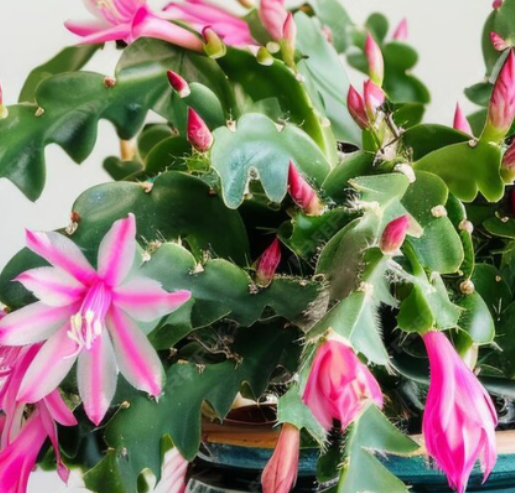
Brazilian species that look quite different from ordinary cacti. During their blooming period they produce beautiful, vivid flowers. The first cactus blooms in winter, while the second blooms in summer. They look great on a bedroom windowsill – they don’t like being touched frequently, repotted, or overwatered. If you’re wondering which windowsill flowers for the bedroom will work best, these cactus varieties are an excellent choice for filling the space beside bedroom windows.
Snake Plant (Sansevieria trifasciata)
A resilient and undemanding plant. It will manage in a well-lit spot as well as a shaded one; it can survive without watering for up to a month. At night it produces a very large amount of oxygen – it’s no wonder that experts consider this so-called “sword plant” to be an excellent choice.

Orchid
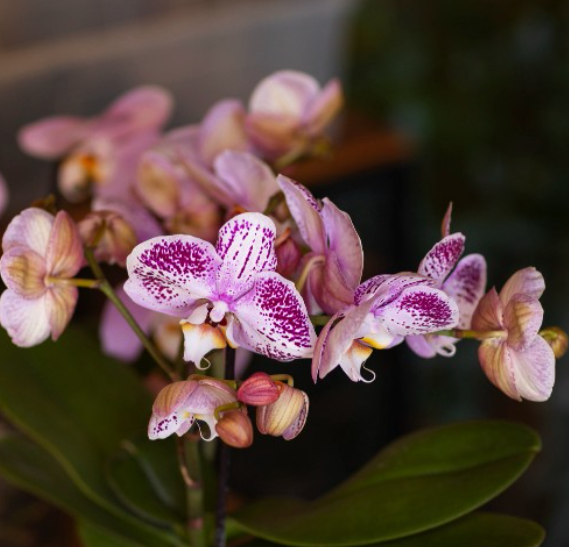
An epiphyte that doesn’t like frequent repotting or overwatering. It blooms beautifully (its flowers form a long inflorescence), has no irritating scent, and works best in the bedroom.
Which Plants Can Be in the Bedroom? Other Recommended Bedroom Plants
Selected species are exceptionally good at humidifying and purifying the air. Bedroom plants that will help improve air quality include: papyrus, fern, common ivy, spider plant, Geranium (pelargonium), gerbera, and dracaena. For the same reason, peace lily is recommended for the bedroom. This plant with numerous white flowers and large, glossy leaves absorbs, among others, alcohol, benzene, and acetone. In summer it needs to be watered more frequently than in winter. Peace lily tops the rankings of plants ideal for placing next to the bed; it’s worth noting, however, that it is toxic, so people with children or pets should exercise caution. Many of the listed species can successfully be grown in a vertical form – on a living plant wall.
Which Bedroom Plants Are Safe for a Child’s Room? The Best Plants for a Little One’s Bedroom
When choosing plants for a child’s bedroom, we must above all keep the child’s safety in mind. We should avoid plants that could harm them – some species may be toxic. Furthermore, especially with young children, pots should be kept out of reach of little hands, so they can’t accidentally knock them off a windowsill or shelf. A child’s room is also a space where hanging bedroom plants work well – mounted at a safe height, of course. Which bedroom plant do we recommend for a child’s room? Tradescantia, ferns, spider plants, and the charmingly flowering African violets make excellent additions to a little one’s corner.
Which Plants to Choose for a Dark Bedroom? Plants That Can Handle Low Light
What other species are worth considering when decorating your bedroom? A positive impact on our health and wellbeing can also be made by azalea, cyclamen, begonia, asparagus fern, hemigraphis, poinsettia, rubber fig, parlour palm, and anthurium. If you own a flat with north-facing windows or the room has small windows, adequate lighting becomes a challenge. In that case, choose shade-tolerant potted plants. They may not be the plants on your dream list, but it’s worth compromising so they grow beautifully and delight the household for a long time. ZZ plant, tradescantia, philodendron, hoya are shade-loving bedroom plants. The aforementioned common ivy is also ideal as a plant for a dark bedroom.
10 Best Bedroom Plants – Which Plants Work for Everyone?
As you can see, there is no single right answer when considering which bedroom plants to choose. The decision depends on our preferences, the space we have available, and the decorating principles we follow. The 10 most universal specimens are:

What’s more, an interesting solution for bedrooms (and beyond!) can also be moss on the wall. When deciding which plants will work best in your arrangement, consider the size of the room and the amount of natural light reaching the interior.
Plants improve sleep quality – some species are particularly good at purifying and humidifying the air. If you’re not sure which houseplant will work best in your bedroom, check out the plant guide prepared by our specialists.
Potted plants are a great choice for bedrooms, but they play an even greater role in commercial spaces. If you manage an office, hotel, restaurant, or reception area and want to create a prestigious interior aligned with wellbeing and ESG principles – check out our custom living walls and furniture with built-in vertical gardens. These are solutions that combine modern design, ecology, and functionality, supporting the company’s image and user comfort.
Frequently Asked Questions About Bedroom Plants
Are bedroom plants healthy?
Yes, appropriately chosen bedroom plants can improve air quality and support restful sleep. Many species act as natural filters, reducing pollutants and increasing air humidity.
Which bedroom plants produce oxygen at night?
Plants that produce oxygen at night include aloe vera, snake plant, orchid, and some cacti. These are a good choice if you want better oxygenation of your body during sleep.
Which bedroom plants to choose with low light?
In a darker bedroom, plants tolerating partial shade work well, such as ZZ plant, ivy, or snake plant. They are low-maintenance and cope well with limited light access.
Are large bedroom plants a good idea?
Yes, but best in spacious interiors. In smaller rooms it’s better to go for individual, smaller plants so as not to overwhelm the space.
Which bedroom plants are safe for a child’s room?
In a child’s room it’s worth choosing non-toxic species, e.g. ferns, spider plants, or African violets. Pots should be placed out of reach of small children.
How many bedroom plants is the optimal number?
In most cases 1–3 plants are sufficient, depending on the size of the room. The most important thing is to maintain balance and provide the plants with appropriate conditions.
Do all bedroom plants purify the air?
Not all to the same degree. The best bedroom plants for air purification include snake plant, aloe vera, ivy, and peace lily.